
Upper Cervical Care
Arm & Hand Numbness or Tingling
Unexplained arm and hand numbness often originates at the top of the cervical spine, not the wrist or elbow.
Numbness, tingling, or weakness in the arms or hands can range from occasional annoyance to constant disruption. Some people describe it as "pins and needles," while others feel heaviness, loss of grip, or burning sensations that come and go.
Sound Like Your Situation?
Numbness and tingling get written off as “probably nothing” more than almost any other symptom. See if this tracks.
- Your hand goes numb overnight or after sitting a certain way, and shaking it out only helps for a minute.
- A nerve conduction study came back normal, but the tingling is still there.
- You were treated for carpal tunnel and it never fully resolved.
Common Symptoms & Patterns
- Numbness in fingers, hands, or forearms — especially after sleeping or sitting
- Tingling that worsens with certain neck or arm positions
- Weakness or clumsiness in one hand
- Burning or radiating pain down the shoulder or arm
- Symptoms that mimic carpal tunnel but tests come back normal
Why the Upper Cervical Spine Matters
The nerves that control your shoulders, arms, and hands begin at the base of the brain and exit through the cervical spine — especially the top two vertebrae (C1 and C2).
- Creates mechanical tension on the spinal cord or nerve roots
- Alters blood flow and oxygen delivery to neural tissue
- Distorts communication between the brainstem and peripheral nerves
- Leads to misfiring signals — felt as tingling, numbness, or weakness
How Upper Cervical Care Helps
While local compression like disc issues or carpal tunnel can contribute, the source of irritation often begins higher up — where neural control originates.
- Precision imaging identifies even millimeter-level misalignments that could affect nerve flow
- Gentle correction — no twisting or cracking — restores alignment and reduces neurological interference
- Whole-system benefit: because the upper cervical spine influences posture, blood flow, and muscle tone, patients often notice improvements beyond the original numbness
What Makes Our Approach Different
Most numbness workups stop at the wrist or elbow. We check whether the signal was ever clean to begin with, starting where it originates.
Precision Imaging
- Detects millimeter-level misalignment affecting nerve pathways
- Measurements customized to your exact anatomy
Precision Correction
- Sound-wave-based adjustment — no torque or forceful motion
- Calculated to your specific angle, vector, and depth
Precision Results
- Tracked against grip strength, sensation, and flare-up frequency
- Verified alignment change confirmed by post-correction imaging
Is This Right for You?
You may benefit from upper cervical care if you experience any of the following.
- Numbness, tingling, or weakness in your hands or arms
- Symptoms that come and go, with no clear pattern
- Tightness or stiffness in the neck or upper back
- Previous head, neck, or shoulder injury before symptoms began
- Carpal tunnel or nerve studies that show no definitive cause
- Relief that’s temporary with massage, stretching, or traditional chiropractic
What to Expect At Gateway Upper Cervical Institute
- Step 1
Consult & Evaluation
We review your symptom history, posture, and neurological function.
- Step 2
Precision Imaging
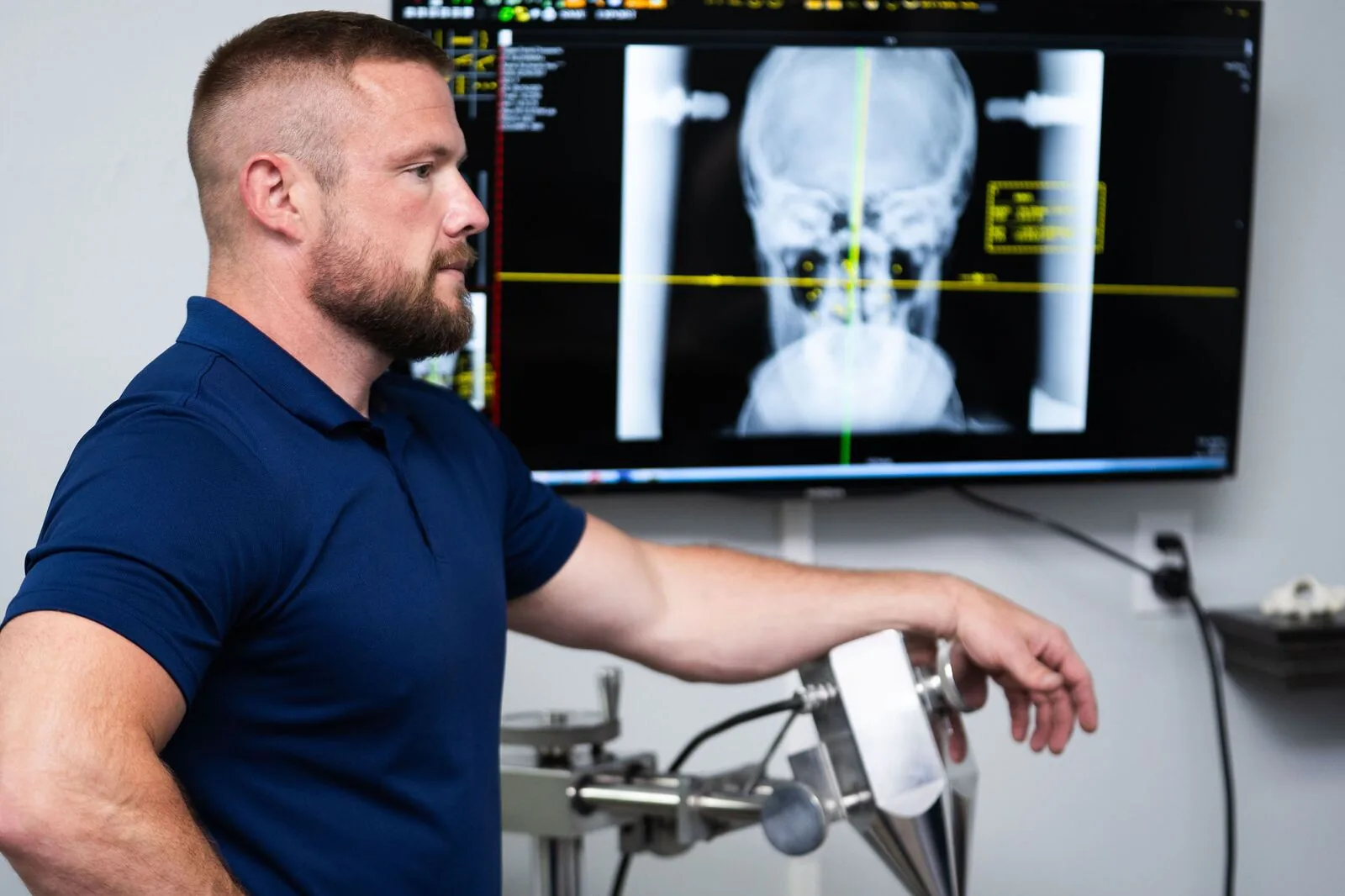
Specialized X-rays measure the exact angle and direction of your atlas (C1) and axis (C2) to fractions of a millimeter — the kind of precision a standard scan is not built to capture.
- Step 3
Correction
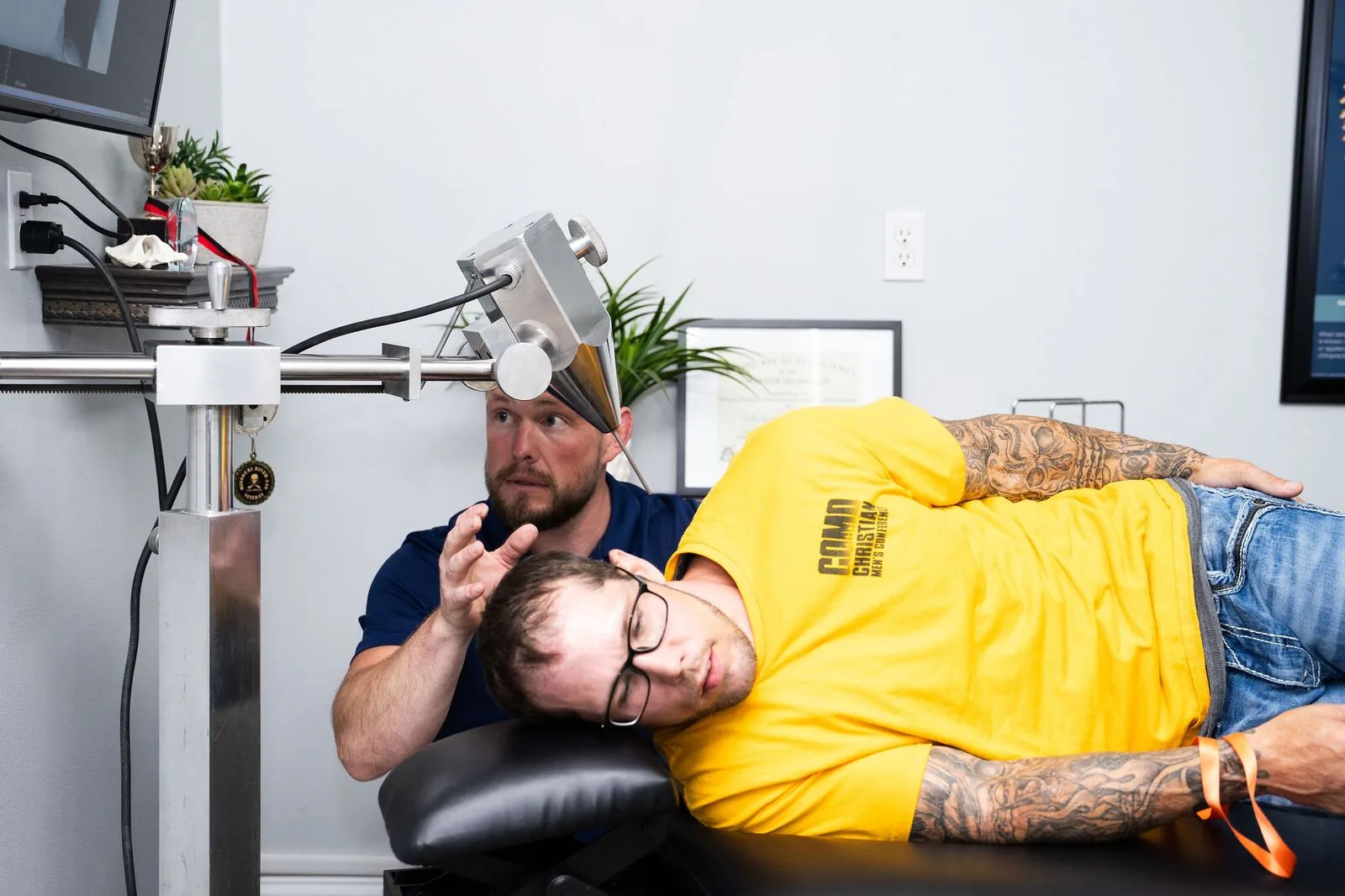
A gentle, sound-wave-based correction is calculated from your imaging and delivered with no twisting, popping, or cracking — the goal is not to move your neck a lot, it is to move it precisely so the correction holds.
- Step 4
Monitoring
We track changes in nerve sensitivity, grip strength, and range of motion to verify improvement.
We don’t just go by how you feel — we measure progress.
Numbness episodes ↓
Less frequent, less intense, and shorter in duration
Grip & sensation ↑
Measured improvement in strength and feeling, not just impression
Verified change ✓
Post-correction checks and imaging confirm improvement
Frequently Asked Questions
My nerve conduction study came back normal — does that rule out a neck problem?
Not necessarily. A nerve conduction study checks electrical conduction along the nerve; it doesn’t evaluate whether the upper cervical spine is mechanically interfering with the nerve’s origin at the brainstem and spinal cord. A "normal" study and a real cervical contribution can coexist.
I was told I might have carpal tunnel. Should I still get checked here?
Carpal tunnel and an upper cervical contribution aren’t mutually exclusive — sometimes both are present, and sometimes what looks like carpal tunnel is actually referred from higher up. Ruling out the cervical piece is worth doing before committing to wrist-focused treatment or surgery.
How quickly would I notice a difference in the numbness itself?
It varies by how long the irritation has been present, but many patients notice a change in frequency or intensity of tingling within the first few weeks, once the correction has had a chance to hold and re-imaging confirms the alignment change.
Do you coordinate with an orthopedist or neurologist I’m already seeing?
Yes. If you’re already being evaluated for carpal tunnel, thoracic outlet, or a cervical disc issue, we coordinate so the structural correction we provide complements rather than duplicates that care.
Is imaging necessary if I already had cervical spine X-rays elsewhere?
Standard cervical X-rays and our upper cervical imaging measure different things — ours is specifically calibrated to detect atlas/axis misalignment to fractions of a millimeter, which general imaging isn’t designed to capture.
Published Research
This systematic review looked at cervical spine manipulation generally, not upper cervical correction specifically, for cervical radiculopathy — the arm and hand numbness this can cause. It found a favorable effect on pain, though evidence quality varied across the included trials.
Ready for less numbness and tingling?
If you’ve tried everything and still can’t find lasting relief, addressing the head–neck connection may reveal what’s been missed.
This page is for informational purposes only and is not a substitute for medical diagnosis or emergency care.