Upper Cervical Care
TMJ Dysfunction & Jaw Pain
Chronic jaw dysfunction often starts at the foundation the jaw sits on — the upper neck — not the jaw joint itself.
TMJ (temporomandibular joint) dysfunction occurs when the hinge that connects your jaw to your skull stops working smoothly. It can cause pain, stiffness, popping, or locking — often made worse by stress, chewing, or clenching.
Does This Match What You’re Experiencing?
TMJ pain rarely stays confined to the jaw. Here’s what that often looks like in practice.
- Your jaw clicks, pops, or catches when you open wide or chew.
- A night guard or dental work helped a little, but the tension keeps coming back.
- You get headaches that seem to start at your temples or behind your eyes.
Common Symptoms & Patterns
- Clicking or popping when opening or closing your mouth
- Jaw tension, tightness, or spasms
- Pain in the jaw, face, or around the ear
- Headaches, especially at the temples
- Neck stiffness or upper shoulder tension
- Ringing in the ears, dizziness, or facial pressure
Why the Upper Neck Matters in TMJ Dysfunction
The jaw doesn’t function on its own — it’s part of a delicate system involving the skull, upper neck, and nervous system.
- Shifts the position of the jaw joint (TMJ), creating uneven pressure during opening and closing
- Tightens muscles that connect the jaw, head, and neck
- Irritates nerves that control chewing and facial sensation
- Disrupts blood flow and proprioceptive feedback between the jaw and brainstem
How Upper Cervical Care Supports TMJ Relief
Rather than forcing the jaw into position, we address the structural balance between the head and neck that allows the jaw to move freely again.
- Precision imaging detects even the smallest upper cervical misalignments affecting jaw motion
- Gentle, sound-wave-based correction restores alignment and relieves pressure at the brainstem — no twisting or cracking
- Co-management with dentists or TMJ specialists when bite therapy or night guards are part of the broader solution
What Makes Our Approach Different
Most TMJ treatment works on the jaw directly — night guards, bite adjustment, injections. We check the foundation the jaw is compensating around.
Precision Imaging
- Detects upper cervical misalignment affecting jaw mechanics
- Measurements customized to your exact anatomy
Precision Correction
- No twisting or cracking — precise adjustment to relieve brainstem-level pressure
- Calculated to your specific angle, vector, and depth
Precision Results
- Tracked against jaw clicking, tension, and range of motion
- Verified alignment change confirmed by post-correction imaging
Is This Right for You?
You may benefit from upper cervical care if any of the following applies.
- You have chronic TMJ pain, tightness, or popping that hasn’t improved with standard care
- You clench or grind your teeth, especially under stress
- You’ve had a head, neck, or whiplash injury before jaw pain began
- You have overlapping symptoms like headaches, vertigo, or ear fullness
- You prefer a gentle, precise, and structural solution over forceful manipulation
What to Expect At Gateway Upper Cervical Institute
- Step 1
Comprehensive Evaluation
We assess jaw movement, neck alignment, posture, and nerve function.
- Step 2
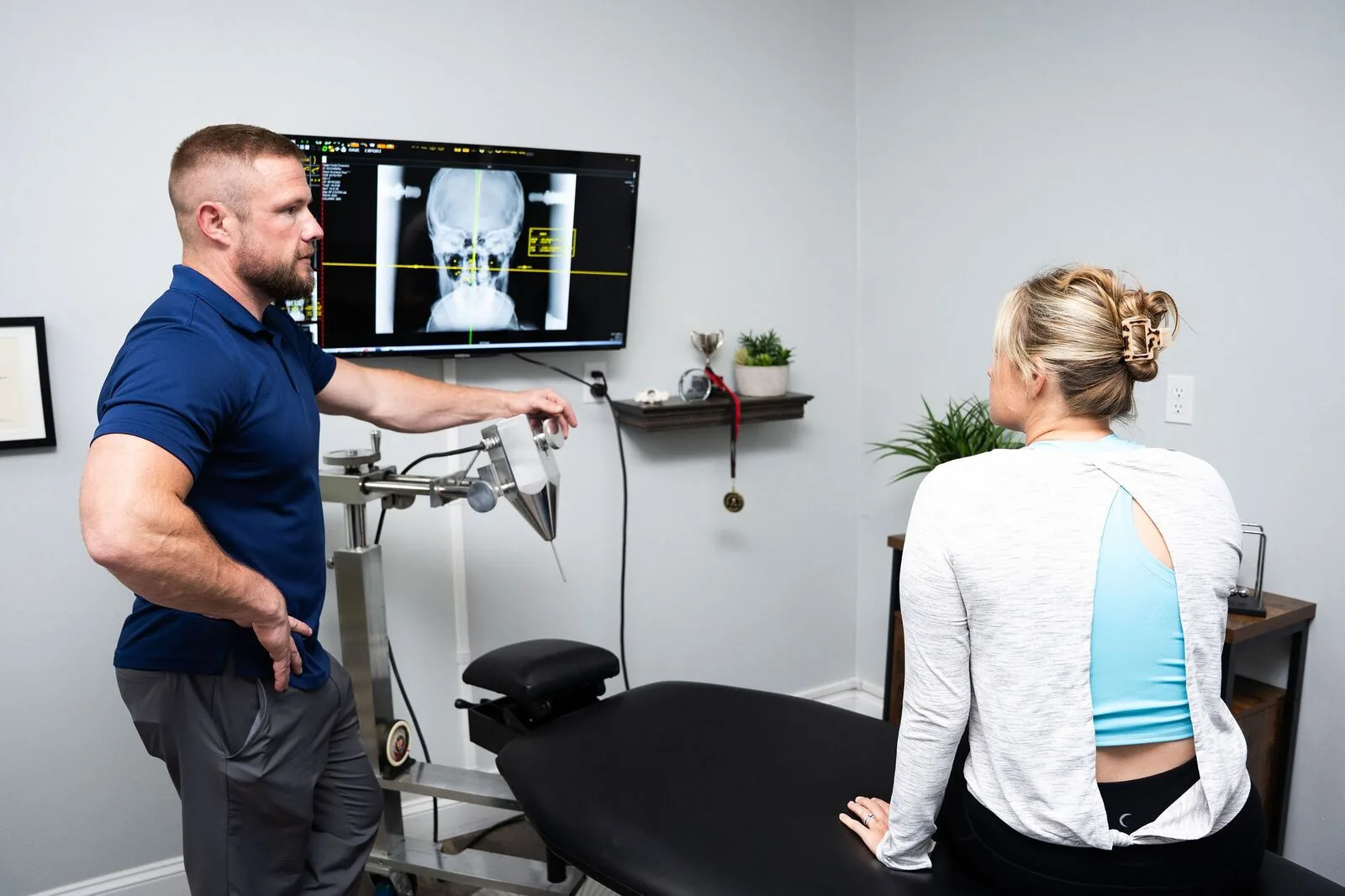
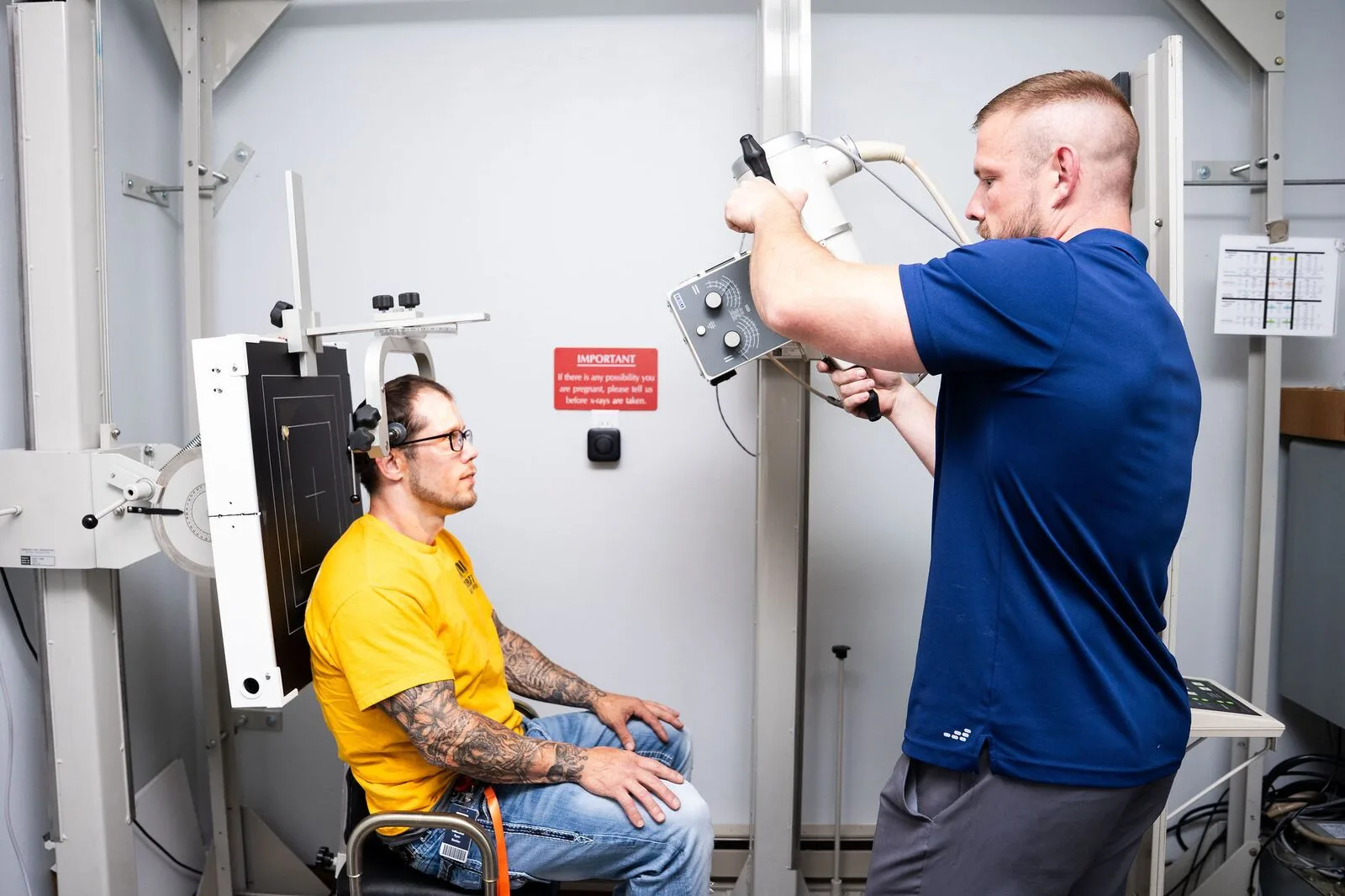
Precision Imaging
Specialized X-rays measure the exact angle and direction of your atlas (C1) and axis (C2) to fractions of a millimeter — the kind of precision a standard scan is not built to capture.
- Step 3
Correction
A gentle, sound-wave-based correction is calculated from your imaging and delivered with no twisting, popping, or cracking — the goal is not to move your neck a lot, it is to move it precisely so the correction holds.
- Step 4
Stability Plan
We monitor how well your correction holds and collaborate with your dental or muscle-therapy provider for long-term stability.
We don’t just go by how you feel — we measure progress.
Jaw symptoms ↓
Less clicking, tension, and pain, tracked visit to visit
Range of motion ↑
Smoother opening and closing without compensating
Verified change ✓
Post-correction checks and imaging confirm improvement
Frequently Asked Questions
I already wear a night guard. Would this replace it?
Not necessarily — a night guard manages clenching forces, while upper cervical care addresses a structural contributor to why the jaw is under strain in the first place. Many patients use both, and we coordinate with your dentist so the two approaches work together.
How does neck alignment actually affect my jaw?
The atlas and axis sit directly beneath the skull and influence head and jaw positioning. If they’re misaligned, the jaw often has to compensate, creating uneven pressure and muscle tension that shows up as clicking, tightness, or pain.
Will the correction involve any pressure on my jaw itself?
No — the correction is applied to the upper cervical spine, not the jaw. It’s a gentle, sound-wave-based adjustment with no twisting or cracking anywhere near the TMJ.
Do you work with my dentist or TMJ specialist?
Yes. When bite therapy, night guards, or dental work are already part of your plan, we coordinate so the structural correction complements that care rather than working separately from it.
How long before I’d notice less clicking or tension?
It varies by how long the pattern has been present, but we track jaw symptoms and range of motion at each visit alongside imaging that confirms the correction is holding, so you’ll have an objective sense of trend, not just a guess.
Published Research
Both studies confirm a real, measurable correlation between upper cervical joint restriction (specifically C0-C3) and TMJ dysfunction, and that treating one can improve the other — though correlation studies like these do not by themselves prove which one starts the problem.
- De Laat A, Meuleman H, Stevens A, Verbeke G. Correlation between cervical spine and temporomandibular disorders. Clinical Oral Investigations. 1998;2(2):54-57. doi:10.1007/s007840050045
- Walczyńska-Dragon K, Baron S. The biomechanical and functional relationship between temporomandibular dysfunction and cervical spine pain. Acta of Bioengineering and Biomechanics. 2011;13(4):93-98.
Ready for less pain?
If nothing else has helped, a precise upper cervical correction may be the missing link. Let’s find out together.
This page is for informational purposes only and is not a substitute for medical diagnosis or emergency care.