
Upper Cervical Care
Headaches & Migraines
Chronic headaches and migraines often trace back to a craniocervical junction problem, not a pain problem.
If you’ve been chasing headache or migraine relief without lasting results, you’re not alone. Most treatments focus on pain control, but the true cause often lies deeper — in how the upper neck and brainstem communicate.
Recognize Any of This?
Not every headache is the same, but a few patterns show up again and again in patients we see.
- You’ve tracked triggers, tried medications, and still can’t predict when the next one is coming.
- Your headaches tend to start on one side, or seem to begin in your neck before moving up.
- Screens, stress, or long days at a desk reliably make things worse.
Common Symptoms & Patterns
- Migraine: with or without aura, often with light/sound sensitivity and nausea
- Tension-type: feels like a tight band around the head, often worse in the afternoon or evening
- Cervicogenic: one-sided pain that starts in the neck and can radiate into the face or head
- Post-concussion: headache with dizziness, brain fog, and sensitivity to screens or light
Why Headaches Keep Coming Back
Headaches are rarely just a pain problem — they’re usually a systems problem involving the neck, brainstem, and autonomic nervous system.
- Craniocervical junction strain (C0–C2): irritation at the top of the spine can amplify pain signals into the head and face
- Brainstem and autonomic imbalance: drives light/sound sensitivity, nausea, and post-migraine fatigue
- Vestibular and visual overload: screens, motion sensitivity, or old concussions can trigger or worsen headaches
- Lifestyle factors: sleep issues, dehydration, blood sugar fluctuations, and medication overuse can perpetuate the cycle
Why the Upper Cervical Region Matters
The atlas (C1) and axis (C2) form the body’s balance hub, and even a small misalignment here can create a cascade of tension, fluid disruption, and nerve irritation.
- Restoring alignment at this key point can calm the entire system
- Reduces frequency, intensity, and duration of headaches over time
- Addresses the structural root rather than only managing pain in the moment
What Makes Our Approach Different
Most headache treatment manages pain after it starts. We look at why the craniocervical junction keeps generating it in the first place.
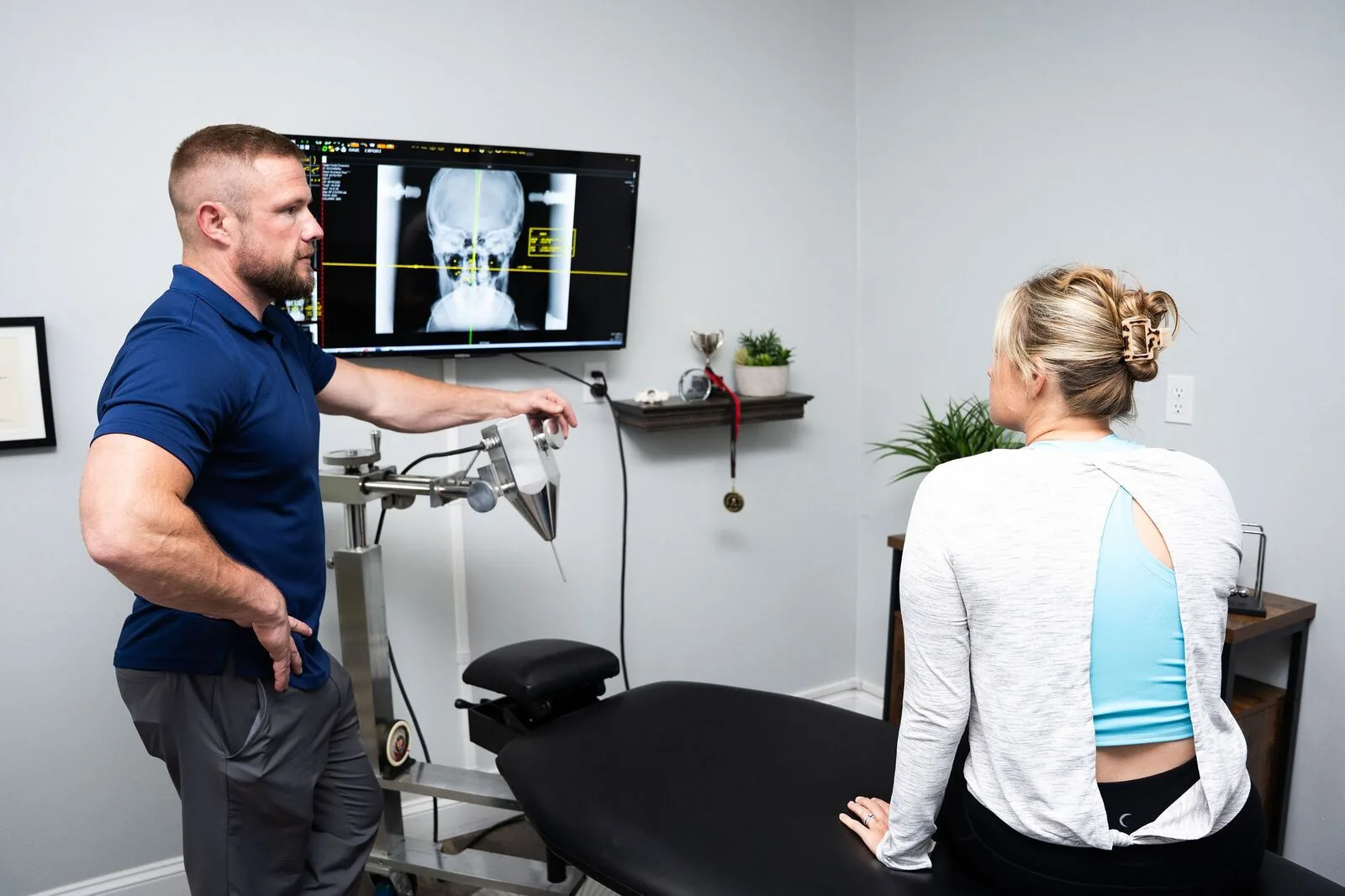
Precision X-Rays
- Detects subtle misalignments other scans overlook
- Measurements customized to your exact anatomy
Precision Correction
- Calculated angle, vector, and depth based on your X-rays
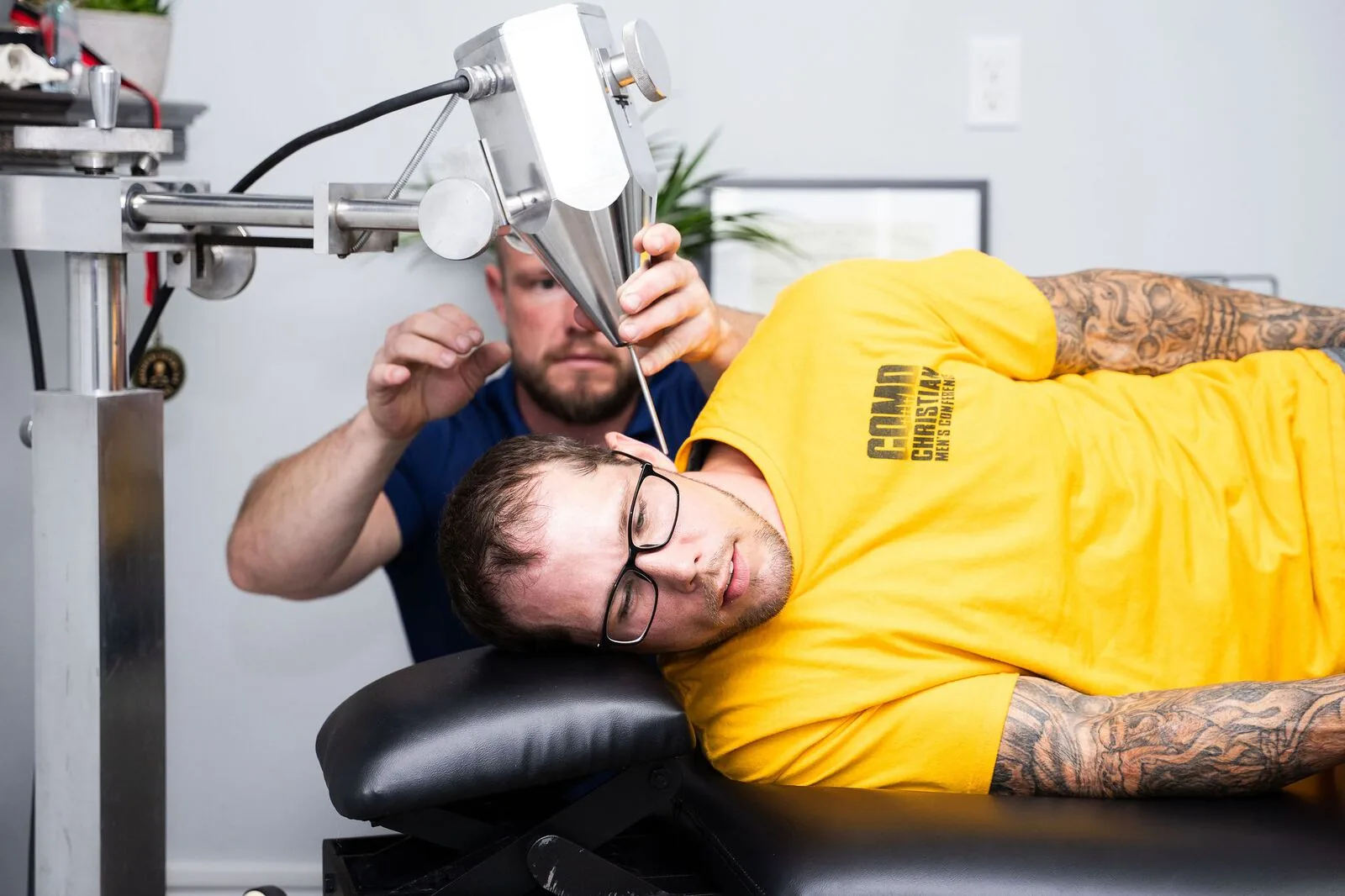
- Gentle, sound-wave-based adjustment — no torque or forceful motion
Precision Results
- Fewer headache days, less intensity, shorter duration — tracked, not guessed at
- Clear before-and-after imaging comparisons
Upper cervical care may be right for you if:
This approach is worth exploring if you recognize your own pattern here.
- You’ve tried medications, injections, physical therapy, massage, or traditional chiropractic without lasting relief
- Your headaches seem tied to neck stiffness, posture, or prior head/neck injuries
- You prefer a data-driven, gentle, and targeted solution
- You’re ready to address the root cause — not just manage the pain
What to Expect At Gateway Upper Cervical Institute
- Step 1
Consult & Exam
We review your headache patterns, triggers, and health history. Neurological testing identifies whether your upper neck is involved.
- Step 2
Precision Imaging
Specialized X-rays measure the exact angle and direction of your atlas (C1) and axis (C2) to fractions of a millimeter — the kind of precision a standard scan is not built to capture.
- Step 3
Correction
A gentle, sound-wave-based correction is calculated from your imaging and delivered with no twisting, popping, or cracking — the goal is not to move your neck a lot, it is to move it precisely so the correction holds.
- Step 4
Stability Plan
We track how well the correction holds and layer in supportive strategies like sleep, hydration, and posture.
We don’t just go by how you feel — we measure progress.
Headache days ↓
Less frequent, less intense, and shorter in duration
Resilience ↑
Fewer triggers, faster recovery when a headache does start
Verified change ✓
Post-correction checks and imaging confirm improvement
Frequently Asked Questions
I’ve tried regular chiropractic for my headaches without lasting results. How is this different?
General chiropractic typically adjusts throughout the spine with manual force. Upper cervical care is narrower and more precise — imaging identifies the exact misalignment at C1/C2, and the correction is calculated to that specific angle, using a gentle sound-wave instrument rather than manual manipulation. Many patients who didn’t hold with general adjustments respond differently to this precision.
Will the correction hurt or make my headache worse right after?
No twisting, popping, or cracking is involved. The Advanced Orthogonal correction uses a specific soundwave most patients don’t even feel. Some people notice a "settling" sensation afterward rather than any spike in pain.
How is a migraine handled differently from a tension headache here?
Both are evaluated through the same craniocervical lens, but your intake and exam distinguish which pattern you have — migraine’s brainstem/autonomic component versus tension-type muscular strain versus cervicogenic referral — because that shapes what we track as progress and what supportive strategies we layer in alongside the correction.
Do you coordinate with my neurologist if I’m already on migraine medication?
Yes. We don’t ask patients to stop medication management elsewhere — we coordinate with primary care, neurology, and other providers so the structural correction complements your existing plan rather than replacing it.
Is imaging really necessary, or can you just adjust based on how my neck feels?
Imaging is the reason this is precise rather than general. Without it, we’d be guessing at direction and degree. With it, the correction is calculated to your specific anatomy and we can verify afterward that the atlas actually moved — not just assume it did.
Published Research
Both studies below are prospective but uncontrolled, so they show association and patient-reported improvement rather than proof that correction alone caused the change — see our full headache and migraine evidence review for what they found and where they fall short.
- Eriksen K, Rochester RP, Hurwitz EL. Symptomatic reactions, clinical outcomes and patient satisfaction associated with upper cervical chiropractic care: a prospective, multicenter, cohort study. BMC Musculoskeletal Disorders. 2011;12:219. doi:10.1186/1471-2474-12-219
- Woodfield HC III, Hasick DG, Becker WJ, Rose MS, Scott JN. Effect of atlas vertebrae realignment in subjects with migraine: an observational pilot study. BioMed Research International. 2015;2015:630472. doi:10.1155/2015/630472
Ready for Fewer Headaches?
If nothing else has helped, a precise upper cervical correction may be the missing link. Let’s find out together.
This page is for informational purposes only and is not a substitute for medical diagnosis or emergency care.