Upper Cervical Care
POTS & Autonomic Imbalance
POTS symptoms often begin after a head or neck injury that disrupted brainstem autonomic regulation.
POTS (Postural Orthostatic Tachycardia Syndrome) is a form of dysautonomia — a disorder of the autonomic nervous system, defined by an excessive heart rate increase (30+ bpm) when moving from lying to standing, often with lightheadedness, fatigue, brain fog, palpitations, or fainting.
Do You See Yourself in This?
POTS and dysautonomia symptoms are easy to explain away individually. Together, they tend to form a pattern.
- You stand up and your heart starts racing before you’ve even taken a full step.
- You crash after activity that used to be easy, sometimes for the rest of the day.
- Your symptoms have been chalked up to anxiety, even though you know something physical is happening.
Common Symptoms & Patterns
- Dizziness or tunnel vision upon standing
- Rapid heartbeat or palpitations
- Fatigue, weakness, or "crashing" after activity
- Temperature intolerance or excessive sweating
- Headaches, nausea, or mental fog
- Anxiety-like sensations driven by physiology, not emotion
Why Upper Cervical Alignment Matters in POTS
The brainstem is the body’s main autonomic command center — it regulates heart rate, blood pressure, respiration, and blood vessel tone.
- Orthostatic intolerance — difficulty maintaining blood flow when upright
- Baroreceptor dysfunction — the brain’s "pressure sensors" misreading signals from the body
- Neurovascular changes — altered blood flow to the brain, leading to dizziness and fatigue
- Heightened sympathetic (fight-or-flight) activity — leaving the body feeling "on edge" even at rest
How Upper Cervical Care Supports POTS Recovery
By precisely restoring alignment, we aim to remove the neurological interference that keeps the autonomic system unstable so the body can find its natural rhythm again.
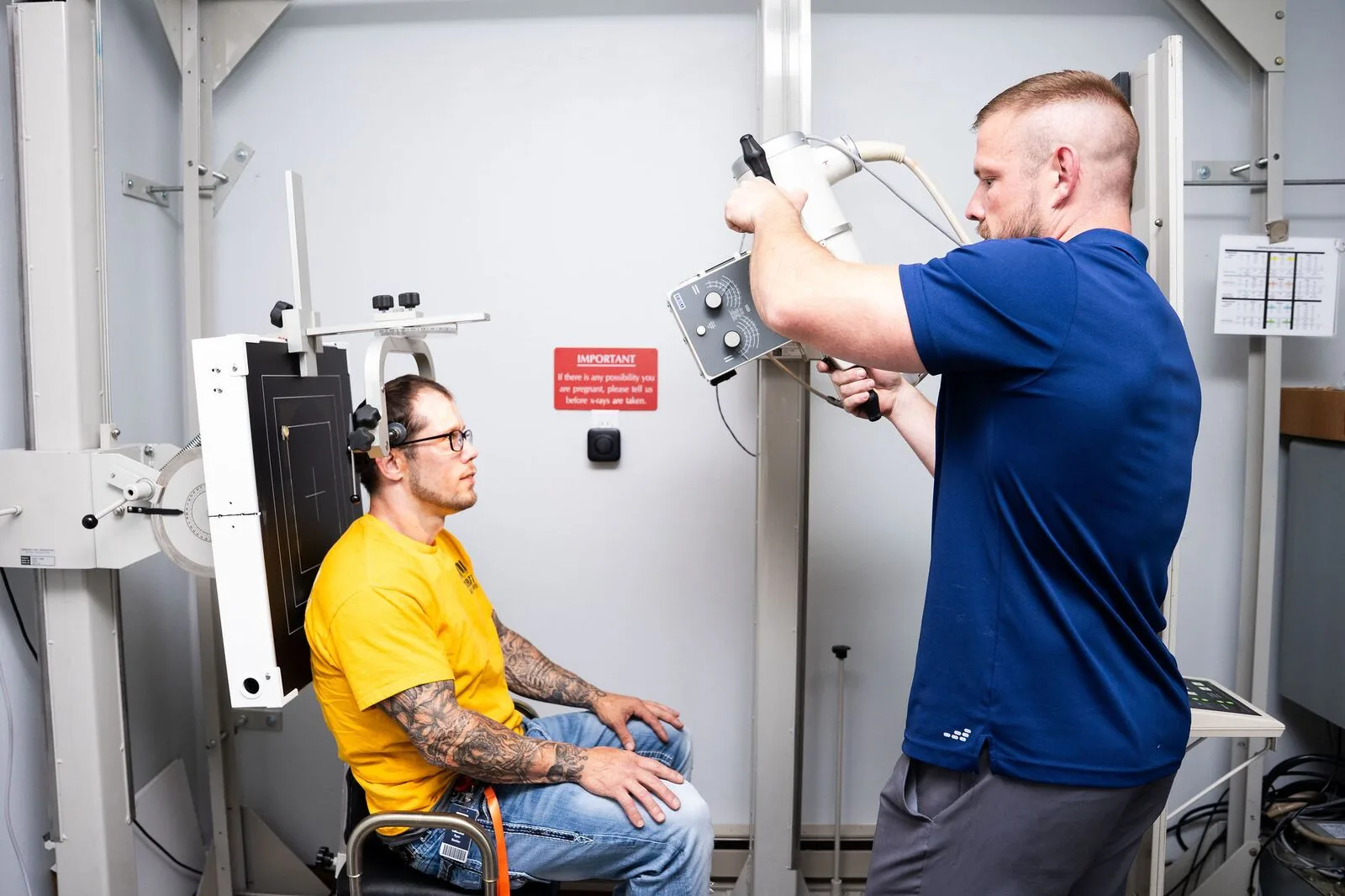
- Precision imaging identifies the exact angle and direction of upper neck misalignment
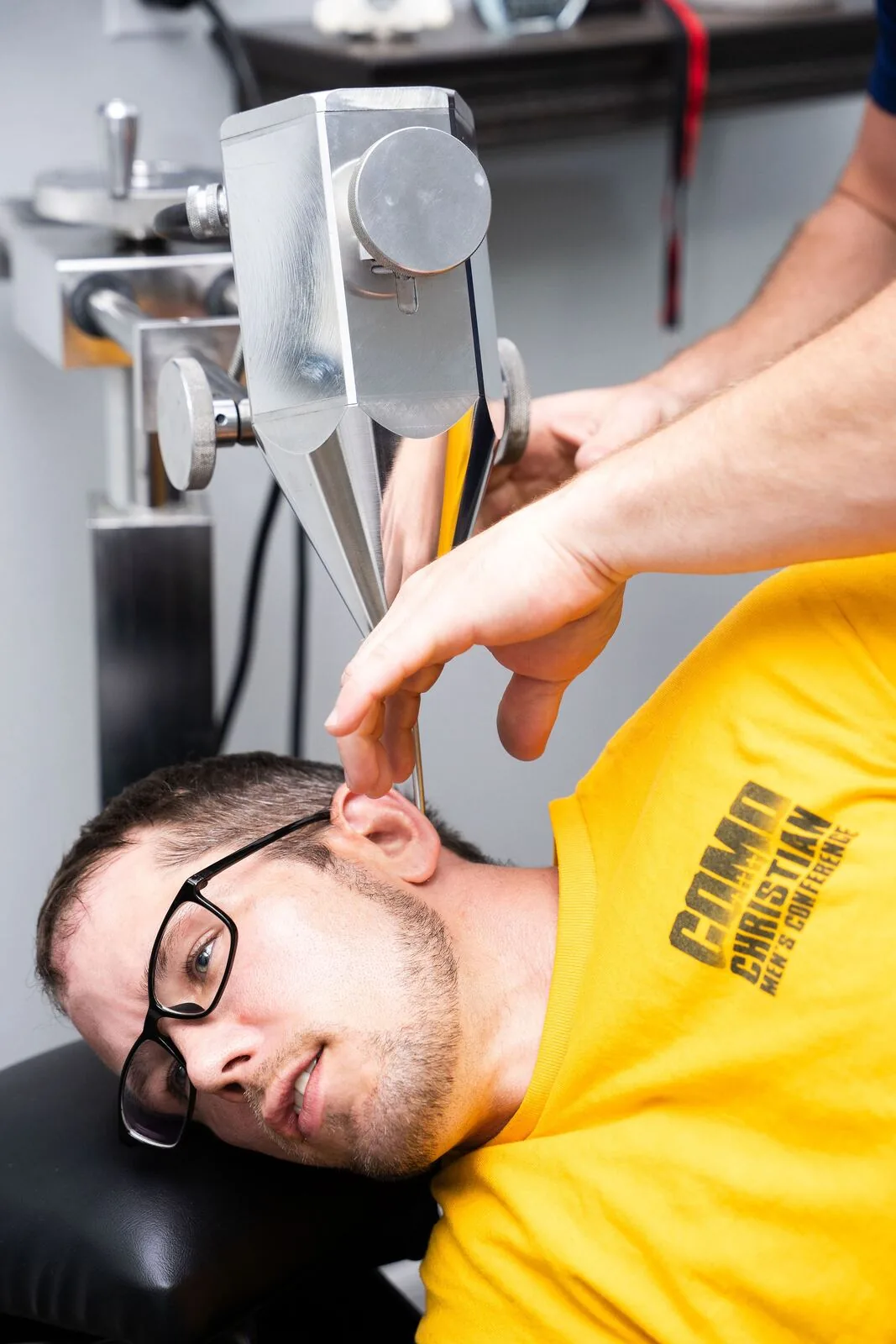
- Gentle correction uses sound-wave-based adjustment — no twisting or popping — to realign C1/C2
- Progress tracking includes structural and functional change: fewer dizzy episodes, steadier heart rate, improved energy
What Makes Our Approach Different
Most POTS management is symptom-by-symptom — a medication for heart rate, another for blood pressure. We look at the regulation point those symptoms all share.
Precision Imaging
- Maps C1/C2 alignment relative to brainstem autonomic centers
- Measurements customized to your exact anatomy
Precision Correction
- Calculated angle, vector, and depth based on your X-rays
- No torque or forceful motion — appropriate for autonomic sensitivity
Precision Results
- Tracked against heart rate response to standing, not just how you feel that day
- Verified structural change confirmed by post-correction imaging
Is This Right for You?
You may be a good candidate if this describes your experience.
- Dizziness or rapid heart rate when standing up
- Brain fog, fatigue, or exercise intolerance
- A history of concussion, neck injury, or whiplash before symptoms began
- Overlapping conditions such as migraine, Ehlers-Danlos, or anxiety-like symptoms without a clear cause
- Frustration with a "normal" workup that doesn’t explain why you still feel off
What to Expect At Gateway Upper Cervical Institute
- Step 1
Comprehensive Consult
We discuss your full symptom picture — not just your neck, but heart rate, dizziness, fatigue, and environmental triggers.
- Step 2
Precision Imaging
Specialized X-rays measure the exact angle and direction of your atlas (C1) and axis (C2) to fractions of a millimeter — the kind of precision a standard scan is not built to capture.
- Step 3
Gentle Correction
A gentle, sound-wave-based correction is calculated from your imaging and delivered with no twisting, popping, or cracking — the goal is not to move your neck a lot, it is to move it precisely so the correction holds.
- Step 4
Monitoring & Stability
We track how well your correction holds while you track measurable progress in heart rate control, energy, and balance.
We don’t just go by how you feel — we measure progress.
Standing tolerance ↑
More time upright before symptoms hit
Heart rate response ↓
Less dramatic spike moving from lying to standing
Verified change ✓
Post-correction imaging confirms alignment, functional tracking confirms the rest
Frequently Asked Questions
My cardiologist already ruled out a heart problem. Why would a chiropractor be relevant?
That’s the right first step, and it’s exactly why upper cervical care becomes relevant next — POTS is a regulation problem, not a structural heart problem, and the brainstem is what does the regulating. We’re not treating your heart; we’re checking whether the neck is interfering with the signal that controls it.
Is the correction safe if my body is already dysregulated and sensitive to being upright?
Yes. The adjustment is low-force and sound-wave-based, delivered with you positioned comfortably, and we adjust pacing for patients who are more autonomically sensitive. We’d rather go slower and watch your response than push through discomfort.
How would we know the correction is actually affecting my POTS and not just placebo?
We track objective markers — heart rate response to standing, frequency of crash episodes, energy and cognition — alongside re-imaging that confirms the atlas actually moved. If those numbers move together, that’s the evidence, not just a feeling.
Do you work alongside my POTS specialist or cardiologist?
Yes. POTS management usually involves several providers — cardiology, autonomic specialists, sometimes neurology. We coordinate so the structural piece we address fits into that broader plan rather than working in isolation.
Can upper cervical correction cure POTS?
We’re careful not to oversell this. Upper cervical care is not a direct "cure" for POTS, but for patients whose symptoms trace back to a head or neck injury, removing that structural interference often meaningfully reduces symptom intensity and improves stability.
Published Research
The published evidence linking upper cervical instability to POTS is currently limited to case-level reports, not controlled trials — a plausible, anatomically grounded hypothesis rather than an established mechanism. See our full POTS evidence review for the details.
- Trager RJ, Schuster A, Tao C, Zamary G. Conservative Management of Cervicogenic Dizziness Associated With Upper Cervical Instability and Postural Orthostatic Tachycardia Syndrome: A Case Report. Cureus. 2024;16(10):e72765. doi:10.7759/cureus.72765
- Schiweck N, Langer K, Maier A, Vilser D, Spiegler J. Systematic literature review: treatment of postural orthostatic tachycardia syndrome (POTS). Clin Auton Res. 2025 Nov 12. doi:10.1007/s10286-025-01172-2
Ready to get started?
If nothing else has helped, a precise upper cervical correction may be the missing link. Let’s find out together.
This page is for informational purposes only and is not a substitute for medical diagnosis or emergency care.