Upper Cervical Care
Concussion and mTBI
Almost every concussion carries a cervical component, because the forces involved rarely injure the brain without also affecting the neck.
If you’ve been dealing with concussion or mTBI symptoms and not getting results, you’re not alone. Most treatments focus on the head alone, but the true cause often lies deeper — in how the upper neck and brainstem communicate. In fact, due to the forces required for a concussion or mTBI, almost all head injuries have a whiplash or cervical component.
Still Dealing With This?
Most concussion symptoms resolve in a couple of weeks. If yours haven’t, this may sound familiar.
- It’s been weeks or months since the injury, and you still don’t feel like yourself.
- Headaches, fogginess, or dizziness showed up after the impact and never fully cleared.
- You passed your concussion protocol, but something still feels off.
Common Symptoms & Patterns
- Concussion (mTBI): often caused by a blow, fall, sports impact, or jolt to the head or body
- Post-concussion syndrome (PCS): persistent headaches, dizziness, brain fog, sleep problems, balance issues, or visual/vestibular concerns
- Neck-related injury accompanying the concussion: ligament, joint, or muscle tension that contributes to lingering symptoms
Why Concussions Don’t Always "Heal" on Their Own
When care focuses on the brain alone, underlying neck and structural issues often go overlooked — even though the forces involved almost always affect both.
- Traumatic forces sufficient to injure the brain (hundreds of G’s) far exceed the much lower forces needed to injure the soft tissue and joints of the upper cervical spine
- Misalignment or injury at the top of the spine can irritate the brainstem, interfere with cerebrospinal fluid circulation, and disturb vertebral artery blood flow
- Dizziness, imbalance, visual-vestibular dysfunction, neck pain, brain fog, and fatigue often have a cervical contribution — especially when symptoms persist beyond usual recovery time
How Upper Cervical Care Works for Concussion & mTBI
Because concussion recovery involves brain, neck, vestibular, visual, and autonomic systems, we integrate the correction with supportive measures to help it hold.
- Comprehensive assessment and imaging evaluates your injury history and subtle atlas/axis misalignment
- Gentle, precise correction addresses C1/C2 misalignment with minimal force, avoiding twisting or cracking
- Referral and collaboration with vestibular/vision specialists, PT, or neurology as needed for a full-spectrum recovery plan
What Makes Our Approach Different
Concussion protocols often clear the brain and stop there. We check the piece those protocols are not built to evaluate: the neck injury that came with it.
Precision Imaging
- Detects atlas/axis misalignment invisible on standard brain-oriented imaging
- Measurements customized to your exact anatomy
Precision Correction
- Minimal-force adjustment appropriate for post-injury sensitivity
- Calculated angle, vector, and depth from your imaging
Precision Results
- Tracked against headache days, dizziness, cognition, sleep, and vestibular symptoms
- Verified structural change confirmed by post-correction imaging
Is This Right for You?
Consider this approach if any of the following applies.
- You experienced a head or neck injury and still deal with headaches, dizziness, foggy cognition, balance issues, sleep disturbance, or visual/vestibular symptoms
- You’ve undergone standard concussion recovery (rest, symptom-based care, PT, vision/vestibular therapy) without the sustained improvement you expected
- Your symptoms worsen with neck movement, postural changes, travel, or screen exposure
- You’re ready for an evaluation that targets structural, neurological, and functional roots — not just symptom management
What to Expect At Gateway Upper Cervical Institute
- Step 1
Consult & Exam
We take a detailed history of your head/neck injury, track which symptoms persist, and perform neurological/vestibular/neck-mobility testing.
- Step 2
Precision Imaging
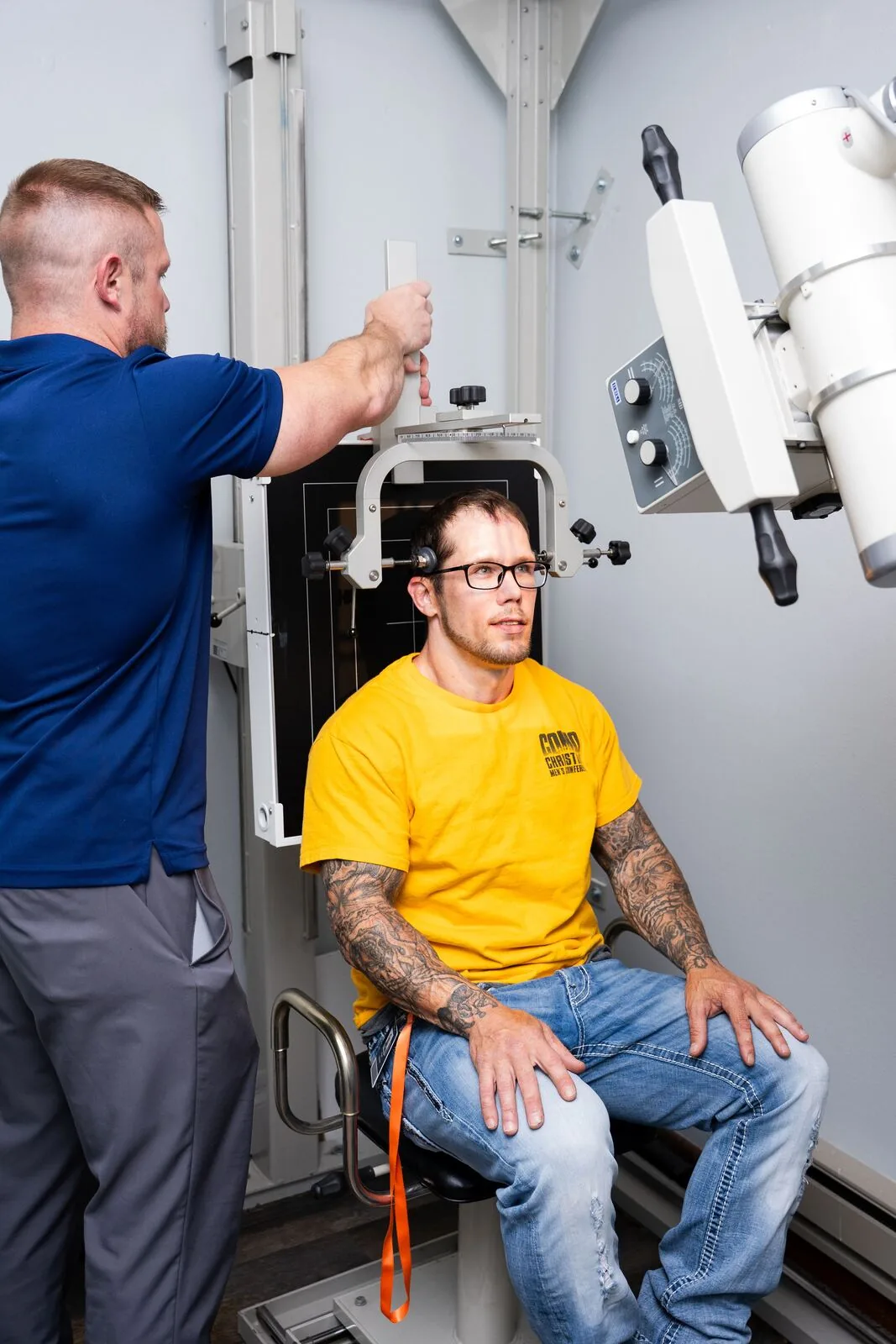
Specialized X-rays measure the exact angle and direction of your atlas (C1) and axis (C2) to fractions of a millimeter — the kind of precision a standard scan is not built to capture.
- Step 3
Correction
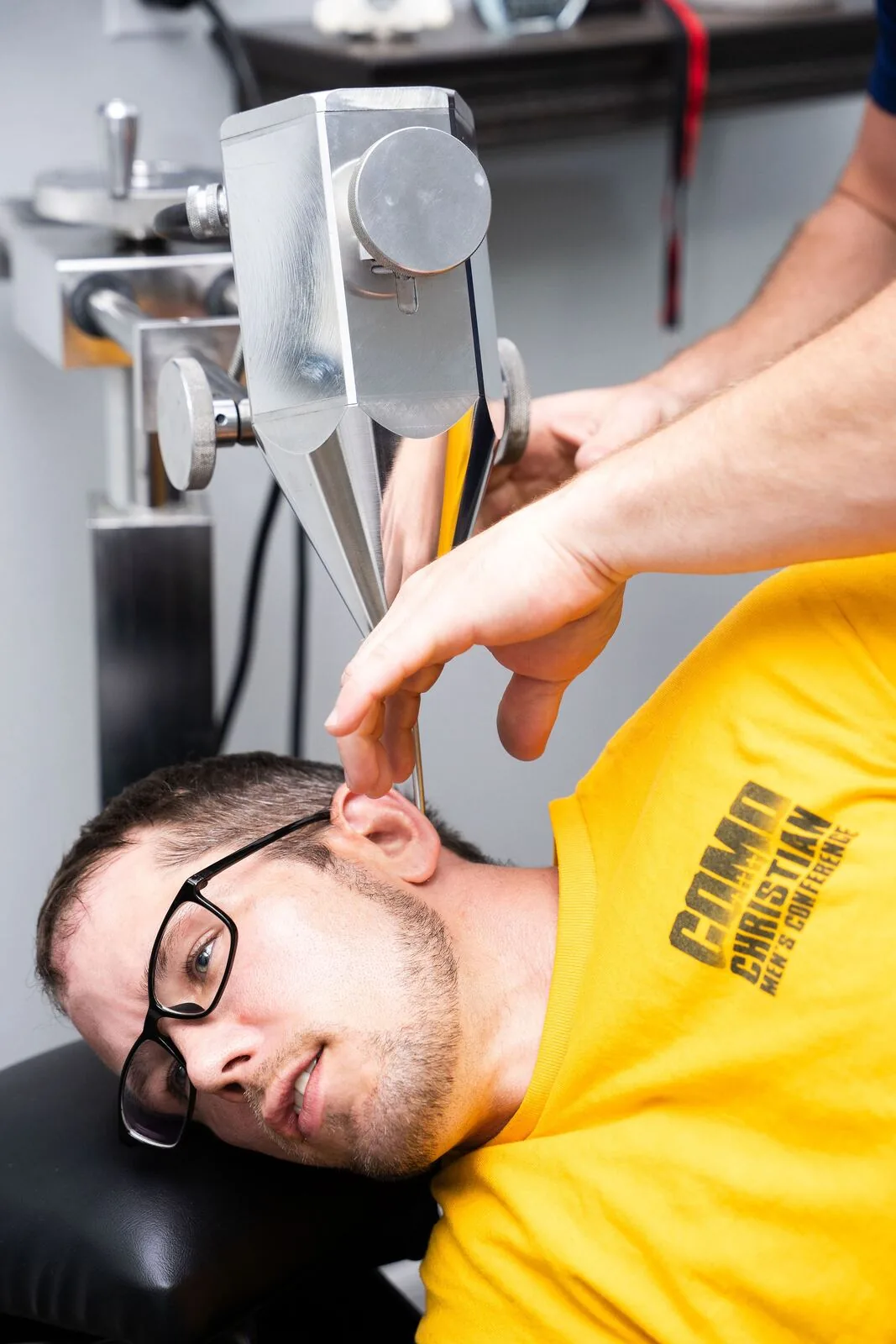
A gentle, sound-wave-based correction is calculated from your imaging and delivered with no twisting, popping, or cracking — the goal is not to move your neck a lot, it is to move it precisely so the correction holds.
- Step 4
Re-check & Stabilize
We closely monitor how well the correction holds, check symptom trends, and integrate neck, posture, and home-care strategies.
- Step 5
Referral & Collaboration
Because PCS often involves multiple systems, we coordinate with vestibular/vision specialists, PT, neurology, or other providers as needed.
We don’t just go by how you feel — we measure progress.
Symptom burden ↓
Fewer symptoms, less intense, especially with movement or screens
Recovery pace ↑
Faster stabilization when the cervical piece is finally addressed
Verified change ✓
Post-correction checks and imaging confirm improvement
Frequently Asked Questions
My brain scans came back clear. Doesn’t that mean my symptoms aren’t from the concussion anymore?
A clear brain scan rules out structural brain injury — it doesn’t evaluate the cervical spine. Since almost every concussion has a whiplash component, lingering symptoms after a "clear" scan are often exactly when a cervical evaluation becomes most relevant.
It’s been months (or years) since my injury. Is it too late to address the neck piece?
Not necessarily. We regularly see patients well past the acute phase whose persistent symptoms had a cervical contributor that was never evaluated. The correction and imaging process is the same regardless of how long ago the injury occurred.
Will the correction be safe given how sensitive my neck already feels post-injury?
Yes — the approach is specifically low-force and calculated from imaging rather than manual manipulation, which is part of why it’s appropriate for post-concussion patients whose necks are already sensitive.
Do you replace my vestibular therapist, PT, or neurologist?
No — we coordinate with them. Post-concussion recovery is multi-system, and the structural correction we provide is meant to complement vestibular, vision, PT, and neurology care, not substitute for it.
How do you track whether this is actually helping my recovery?
We track headache days, dizziness, cognitive symptoms, sleep, and vestibular symptoms alongside re-imaging that confirms the atlas/axis correction is holding — structural and functional markers together, not just how one day feels.
Published Research
This review of 43 studies concluded that cervical spine involvement in post-concussion symptoms is clinically well accepted, even though rigorous outcome trials are still limited — consistent with why a neck exam is often left out of standard concussion care.
Ready to get your head on straight?
If nothing else has helped, a precise upper cervical correction may be the missing link. Let’s find out together.
This page is for informational purposes only and is not a substitute for medical diagnosis or emergency care.