Upper Cervical Care
Tinnitus & Ear Ringing
Tinnitus with normal hearing tests often points to a brainstem regulation problem at the top of the neck, not an ear problem.
Tinnitus is more than just a ringing in the ears — it’s a constant reminder that something isn’t right. For some, it’s a faint tone; for others, it’s a roar, hum, or high-pitched whine that never goes away.
Is This the Sound You’re Hearing?
Tinnitus is easy to describe and hard to explain — see if any of this fits.
- There’s a ringing, buzzing, or humming in one or both ears that doesn’t let up.
- The sound seems to shift or intensify depending on your head or neck position.
- A hearing test came back normal, which raised more questions than it answered.
Common Symptoms & Patterns
- Ringing, buzzing, or humming in one or both ears
- Sounds that pulse or change with posture or head position
- Ear fullness, pressure, or mild imbalance
- Increased sensitivity to sound or background noise
- Coexisting headaches, dizziness, or neck tension
Why the Upper Cervical Spine Matters
The upper cervical region (C1 and C2) sits directly beneath the brainstem, where crucial nerves and blood vessels travel to the inner ear.
- Distorts nerve signals between the ear and brainstem
- Alters blood flow or venous drainage from the inner ear
- Creates muscle tension that changes inner-ear pressure
- Heightens sensory gain in the brain’s auditory centers — making quiet sounds feel louder
How Upper Cervical Care Helps
Our goal is to restore balance at the head–neck junction so your nervous system can quiet the noise naturally.
- Precision imaging maps the exact alignment of your atlas and axis to identify structural imbalance
- Gentle, sound-wave correction restores alignment without twisting or popping — designed to reduce pressure and improve circulation
- Comprehensive follow-up tracks both structural change and functional outcomes — sound intensity, ear pressure, and balance
What Makes Our Approach Different
Most tinnitus care starts and ends at the ear. We check the brainstem regulation point just beneath it, which is often the actual control point for the noise.
Precision Imaging
- Maps atlas/axis alignment relative to auditory pathways
- Measurements customized to your exact anatomy
Precision Correction
- No twisting or popping — designed to reduce pressure and improve circulation
- Calculated to your specific angle, vector, and depth
Precision Results
- Tracked against sound intensity, ear pressure, and balance
- Verified alignment change confirmed by post-correction imaging
Is This Right for You?
You may benefit from upper cervical care if any of the following applies.
- Ringing, buzzing, or hissing that hasn’t improved with ENT or audiology care
- Tinnitus that worsens with stress, posture, or neck stiffness
- Dizziness, imbalance, or headaches alongside ear noise
- A history of head, neck, or jaw trauma before your tinnitus began
- A desire for a gentle, neurologically-based approach rather than masking symptoms
What to Expect At Gateway Upper Cervical Institute
- Step 1
Consult & Evaluation
We discuss your tinnitus history, triggers, and related neck or balance issues.
- Step 2
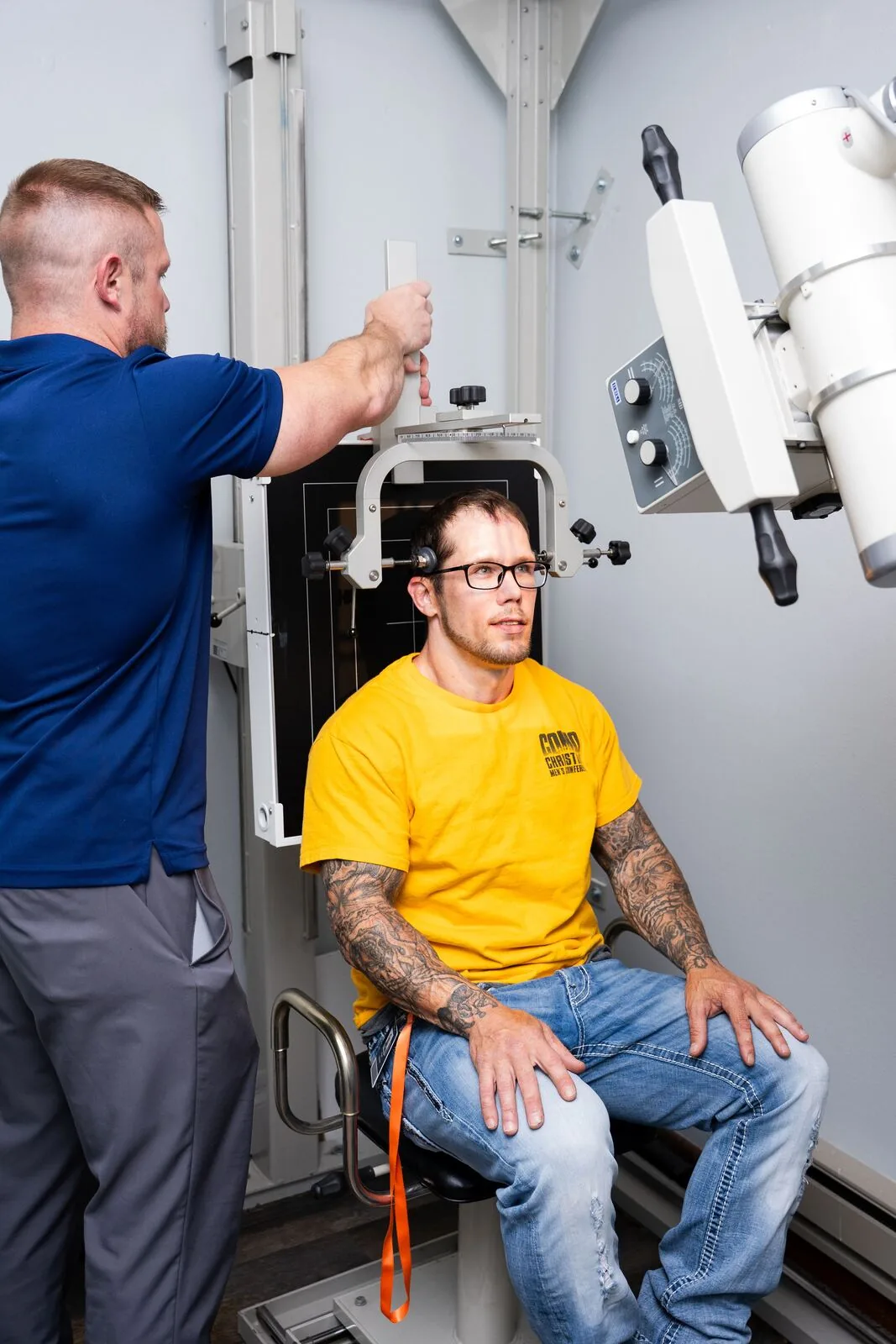
Precision Imaging
Specialized X-rays measure the exact angle and direction of your atlas (C1) and axis (C2) to fractions of a millimeter — the kind of precision a standard scan is not built to capture.
- Step 3
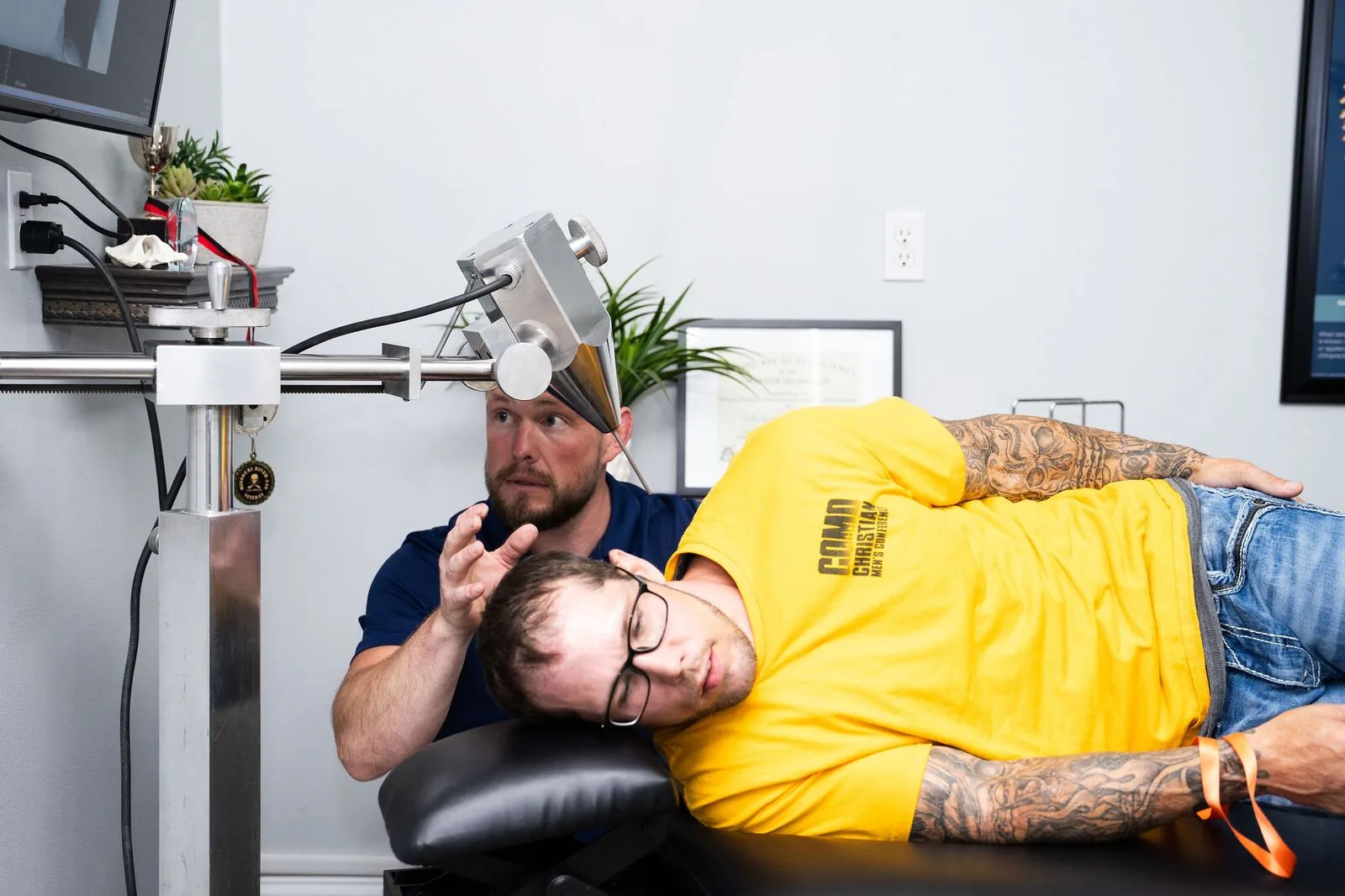
Gentle Correction
A gentle, sound-wave-based correction is calculated from your imaging and delivered with no twisting, popping, or cracking — the goal is not to move your neck a lot, it is to move it precisely so the correction holds.
- Step 4
Monitoring & Progress
As your correction stabilizes, the noise often softens, steadies, or becomes less intrusive for many patients.
We don’t just go by how you feel — we measure progress.
Perceived volume ↓
A "turned down" quality to the ringing, tracked visit to visit
Quiet moments ↑
More stretches without the noise being the loudest thing in the room
Verified change ✓
Post-correction checks and imaging confirm improvement
Frequently Asked Questions
My hearing test came back completely normal. Why would a chiropractor be relevant?
A hearing test measures your ear’s ability to detect sound — it doesn’t evaluate the brainstem’s role in regulating auditory signal processing. Tinnitus with normal hearing is actually a common pattern for a cervical contribution, since the problem often isn’t the ear itself.
Does the tone or pitch of my tinnitus matter for whether this could help?
Not particularly — what matters more is whether your tinnitus correlates with posture, neck tension, or a history of head/neck trauma. Those patterns suggest a cervical contributor worth evaluating regardless of the specific sound.
Will the correction near my neck affect my ears directly?
The adjustment targets the atlas and axis, which sit directly beneath the brainstem structures connected to inner-ear blood flow and nerve signaling — so while we’re not touching the ear itself, that proximity is exactly why upper cervical alignment can influence tinnitus.
Do you coordinate with my ENT or audiologist?
Yes. If you’re already being evaluated or treated by ENT or audiology, we coordinate so the structural correction complements that care rather than working in isolation.
How would we know if this is actually reducing my tinnitus versus just fluctuating on its own?
We track your reported sound intensity, ear pressure, and related symptoms at every visit alongside imaging that confirms the correction is holding — a consistent downward trend across visits, rather than one good day, is what we’re watching for.
Published Research
Cervicogenic somatic tinnitus is a recognized, published subtype in the audiology literature, with the strongest treatment evidence so far coming from cervical physical therapy rather than upper cervical chiropractic specifically.
Ready for clearer ears?
If nothing else has helped, a precise upper cervical correction may be the missing link. Let’s find out together.
This page is for informational purposes only and is not a substitute for medical diagnosis or emergency care.