
Upper Cervical Care
Brain Fog & Cognitive Fatigue
Brain fog with normal labs often points to a circulation and brainstem-signal issue at the top of the neck, not a lack of effort.
Brain fog can make even simple tasks feel harder than they should. Patients often describe it as feeling "off," "disconnected," or "mentally tired." It’s not a lack of motivation — it’s a lack of clear signal.
Feel Like This Describes You?
Brain fog is hard to put into words until someone else describes it back to you.
- You lose your train of thought mid-sentence more than you used to.
- Your labs and imaging came back normal, but your brain still doesn’t feel like it’s running right.
- Ordinary mental tasks — multitasking, remembering names, following a conversation — take more effort than they should.
Common Symptoms & Patterns
- Trouble concentrating or finding words
- Feeling spaced out or mentally slow
- Fatigue that feels neurological, not just physical
- Forgetfulness or difficulty multitasking
- Head pressure, dizziness, or imbalance
- Increased overwhelm from light, sound, or motion
Why the Upper Cervical Spine Matters
The upper cervical spine (C1 and C2) sits at the crossroads between your brain and body, and even subtle misalignment here can disrupt several systems at once.
- Blood flow between the brain and body
- Cerebrospinal fluid (CSF) circulation, affecting detox and nutrient delivery
- Brainstem function, which controls focus, alertness, and autonomic balance
- Nerve communication that coordinates muscle tone, posture, and sensory input
How Upper Cervical Care Supports Cognitive Clarity
Our process is gentle, precise, and measurable — we don’t crack or twist, we use a scientific approach to restore alignment and improve neurological communication.
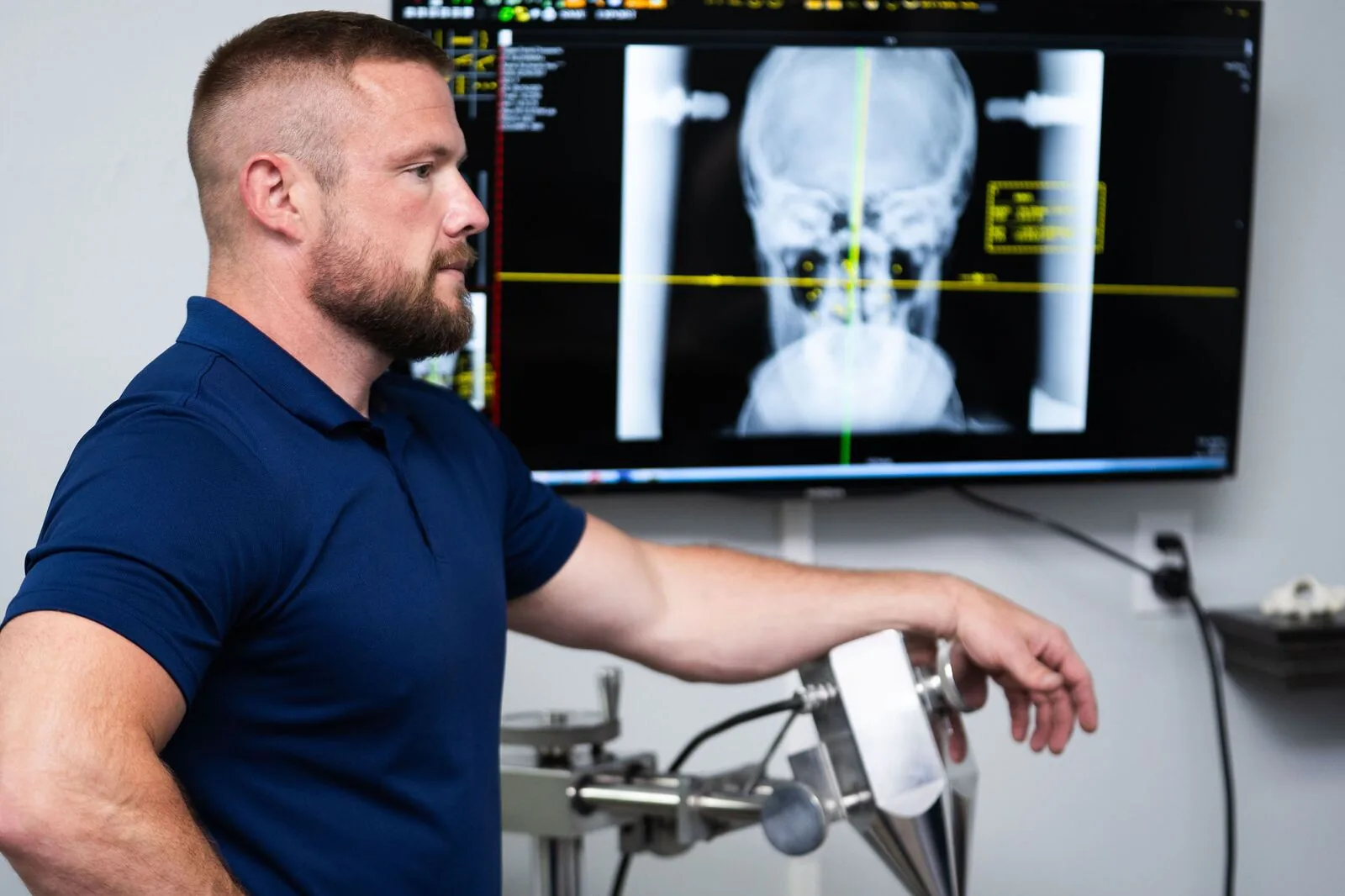
- Precision imaging measures your exact alignment to millimeters and degrees
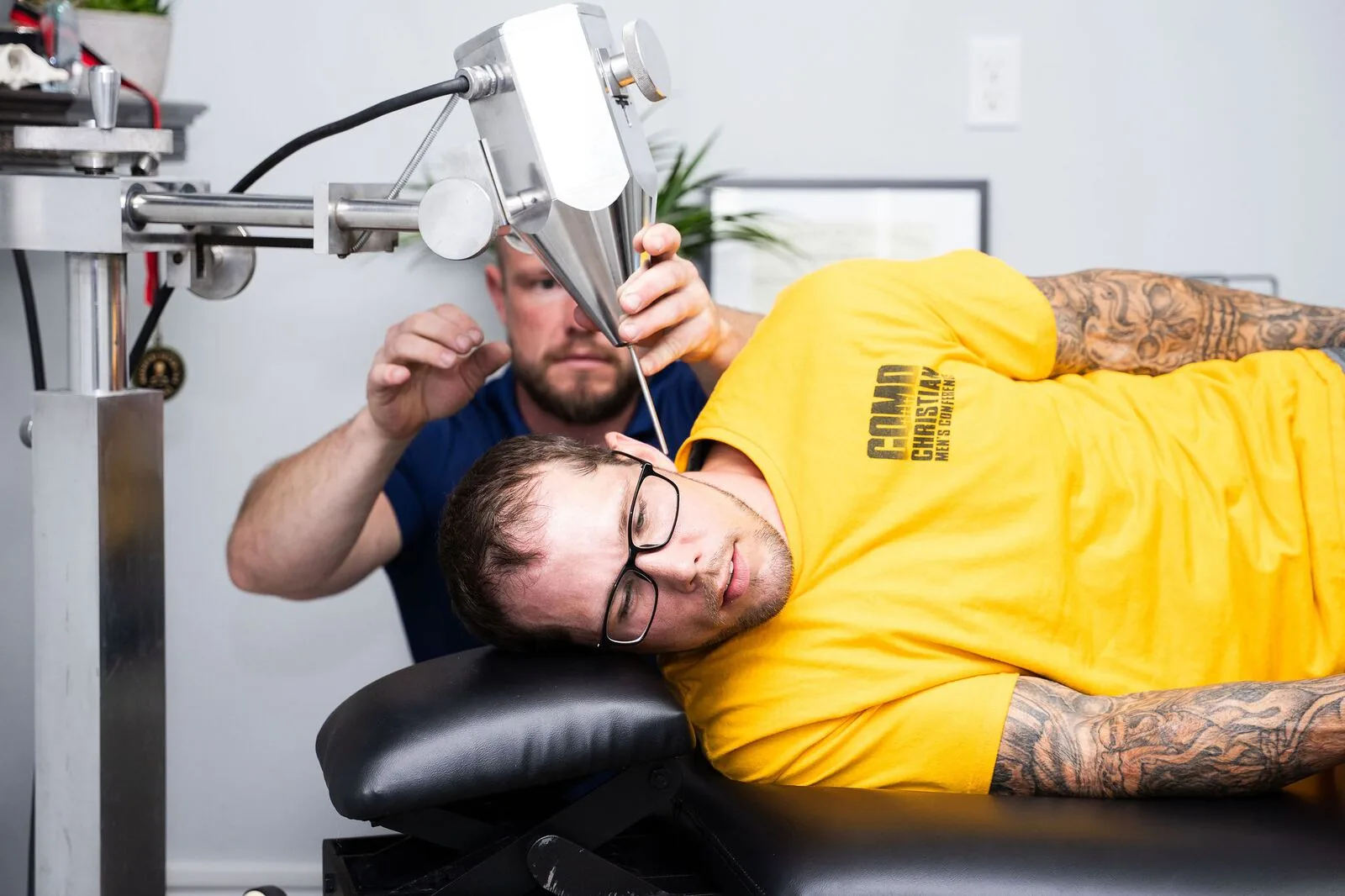
- Gentle, sound-wave correction addresses the head–neck balance point without forceful manipulation
- Improved circulation supports brain oxygenation and detox as alignment is restored
What Makes Our Approach Different
Brain fog workups often end at "your labs are normal." We check a system labs don’t measure: blood flow and signal quality at the base of the skull.
Precision Imaging
- Measures atlas/axis alignment to millimeters and degrees
- Measurements customized to your exact anatomy
Precision Correction
- Gentle, sound-wave-based — no torque or forceful motion
- Calculated to your specific angle, vector, and depth
Precision Results
- Tracked against focus, mental fatigue, and sensory overwhelm
- Verified alignment change confirmed by post-correction imaging
Is This Right for You?
You may benefit from upper cervical care if you experience the following.
- Ongoing brain fog after concussion, illness, or stress
- Fatigue or poor focus despite adequate sleep
- Sensitivity to screens, motion, or bright lights
- Head or neck tightness that seems to worsen mental fatigue
- "Normal" medical tests but continued cognitive symptoms
What to Expect At Gateway Upper Cervical Institute
- Step 1
Comprehensive Consultation
We discuss your brain fog timeline, triggers, and related symptoms like dizziness, headaches, and fatigue.
- Step 2
Precision Imaging
Specialized X-rays measure the exact angle and direction of your atlas (C1) and axis (C2) to fractions of a millimeter — the kind of precision a standard scan is not built to capture.
- Step 3
Gentle Correction
A gentle, sound-wave-based correction is calculated from your imaging and delivered with no twisting, popping, or cracking — the goal is not to move your neck a lot, it is to move it precisely so the correction holds.
- Step 4
Stabilization
As your correction holds, neurological efficiency and mental sharpness begin to return for many patients.
We don’t just go by how you feel — we measure progress.
Mental clarity ↑
Steadier focus and less "spaced out" feeling day to day
Fatigue ↓
Less neurological tiredness independent of sleep quantity
Verified change ✓
Post-correction checks and imaging confirm improvement
Frequently Asked Questions
All my bloodwork and scans came back normal. What would you actually find that they missed?
Standard labs and brain imaging aren’t designed to detect upper cervical misalignment or its effect on blood flow and CSF circulation. "Normal" results on those tests don’t rule out a structural contributor at C1/C2 — that requires the specific imaging we use.
How would neck alignment cause something that feels like a brain problem?
The upper cervical spine sits at the crossroads between brain and body — it affects blood flow, cerebrospinal fluid circulation, and brainstem function, all of which influence focus, alertness, and mental energy. A misalignment there can create cognitive symptoms without there being anything wrong with the brain itself.
I feel foggy and overwhelmed easily — will the exam or correction be too much?
We keep the process calm and paced appropriately, and the correction itself is gentle and sound-wave-based rather than forceful. Many patients with sensory overwhelm tolerate it well specifically because it’s low-force.
Do you coordinate with my primary care doctor if I’m being worked up for other causes?
Yes. Brain fog can have multiple contributors, so we coordinate with primary care and relevant specialists so the structural piece we check fits into your broader workup rather than replacing it.
How soon would I notice clearer thinking if this is the right approach for me?
It depends on how long the pattern has been present, but we track focus, fatigue, and sensory tolerance at each visit alongside re-imaging, so you’ll have an objective read on trend within the first several weeks.
Published Research
"Brain fog" itself has not been directly studied as an upper-cervical outcome. This source instead documents the real, well-established mechanism it rests on: head/neck rotation can transiently reduce vertebral artery blood flow to the brainstem, a more extreme version of which is called Bow Hunter's syndrome.
Ready for less fog?
If nothing else has helped, a precise upper cervical correction may be the missing link. Let’s find out together.
This page is for informational purposes only and is not a substitute for medical diagnosis or emergency care.