
Upper Cervical Care
Vertigo & Dizziness
Persistent vertigo often traces back to a misaligned atlas (C1), not the inner ear.
Vertigo and balance problems are among the most disorienting symptoms a person can experience. Many patients describe it as if the ground is moving or their head feels disconnected from their body. When medications and vestibular therapy haven’t resolved it, the upper neck is often the piece that was never checked.
Does Any of This Sound Familiar?
Before the mechanism, the research, or the process — a simpler question first.
- You’ve had a clean MRI and normal vestibular testing, but the dizziness never actually went away.
- You feel steadier some days and completely off on others, with no pattern you can point to.
- Turning your head, rolling over in bed, or standing up too fast brings on a wave of spinning or unsteadiness.
Common Symptoms & Patterns
- Positional vertigo (BPPV): sudden spinning with head movement or rolling over in bed
- Vestibular migraine: dizziness or motion sensitivity with or without headache
- Cervicogenic dizziness: unsteady, floating, or off-balance sensation linked to neck tension or posture
- Post-concussion dizziness: persistent imbalance or motion sensitivity following head or neck trauma
- Autonomic-related dizziness: lightheadedness or faintness from blood pressure or heart rate changes
Why Vertigo and Dizziness Often Persist
Most dizziness treatment targets the inner ear or eyes, but the upper neck is where balance information from the body, eyes, and inner ear all converge.
- Sensory mismatch between the eyes, inner ear, and body position
- Muscle and joint tension in the upper neck that confuses balance reflexes
- Altered blood flow or cerebrospinal fluid dynamics that contribute to motion sensitivity
- Overactivation of the autonomic (fight-or-flight) system, intensifying lightheadedness or nausea
How Upper Cervical Care Helps Restore Balance
The upper cervical spine houses sensors that constantly tell your brain where your head is in space, and a misalignment here can send conflicting messages to the inner ear.
- Identifies the exact degree and direction of misalignment in the atlas/axis region
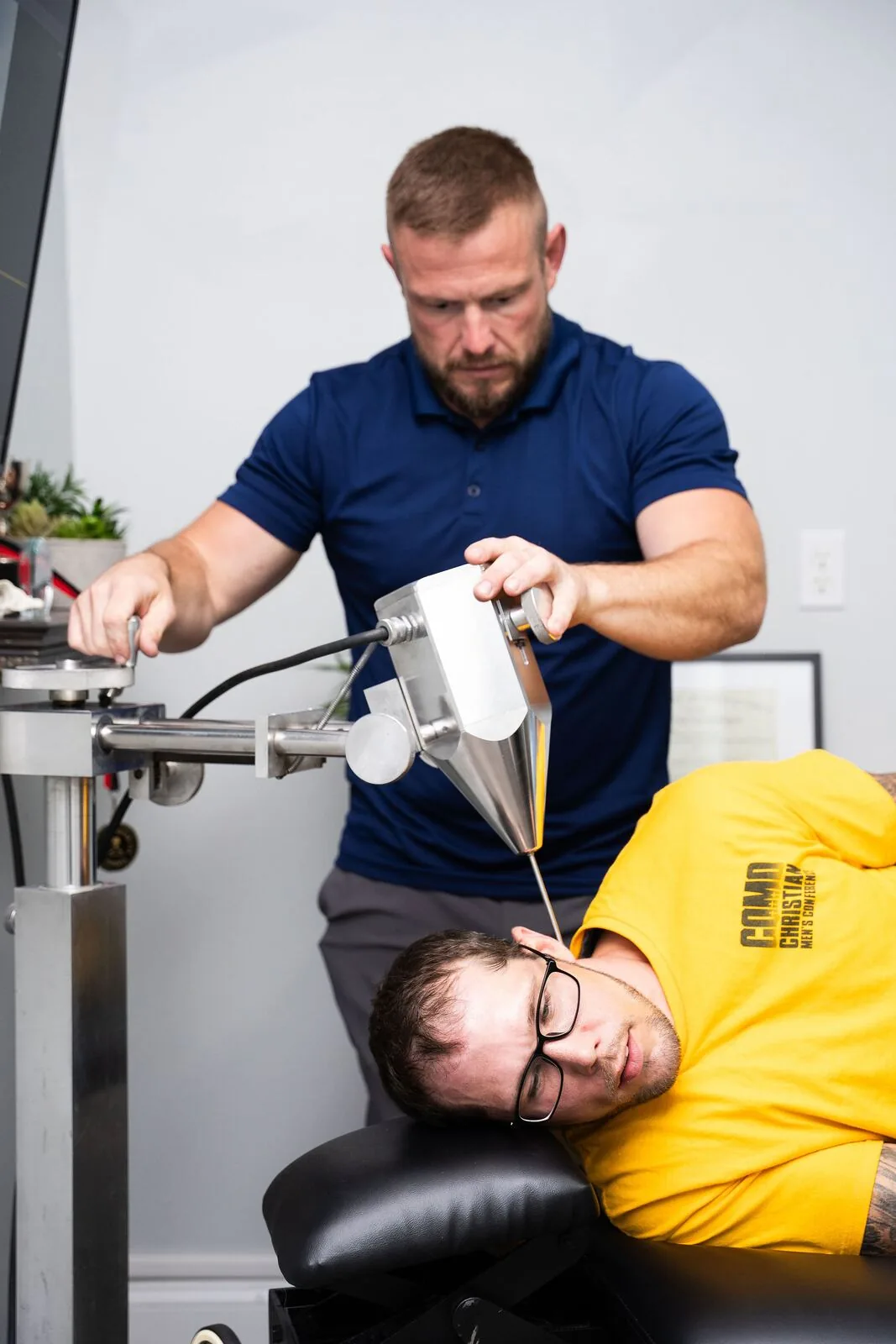
- Uses a gentle, sound-wave-based correction — no twisting or cracking
- Restores symmetrical input to the brainstem and vestibular system so balance reflexes normalize naturally
What Makes Our Approach Different
Vertigo care fails most often when treatment stops at the inner ear. Ours starts at the structure that feeds it conflicting signals in the first place.
Precision Imaging
- Detects atlas/axis misalignment other scans overlook
- Measurements customized to your exact anatomy
Precision Correction
- Calculated angle, vector, and depth based on your X-rays
- No torque, twisting, or forceful motion
Precision Results
- Verified alignment and balance improvement, not just a symptom check-in
- Tracked against your specific spinning, swaying, or unsteady episodes
Is This For You?
Upper cervical care is worth investigating if any of this sounds familiar.
- Spinning, swaying, or motion sensitivity
- Difficulty walking straight or turning your head without dizziness
- Episodes triggered by posture, stress, or neck stiffness
- Ongoing imbalance even after ENT or vestibular therapy
- A history of head or neck trauma, whiplash, or concussion
What to Expect At Gateway Upper Cervical Institute
- Step 1
Consult & Exam
We review your dizziness patterns, triggers, and health history, then run neurological testing to identify whether your upper neck is involved.
- Step 2
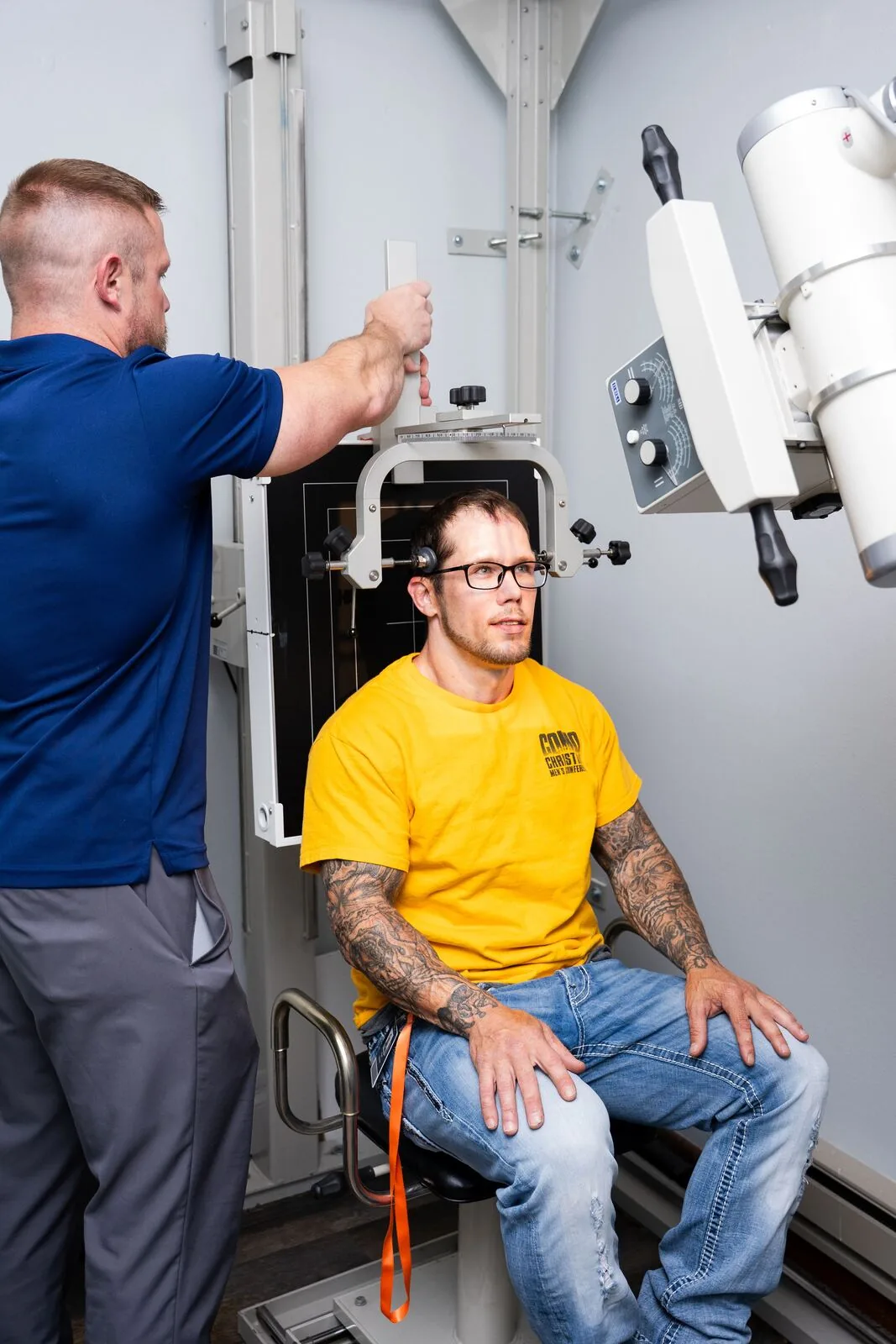
Precision Imaging
Specialized X-rays measure the exact angle and direction of your atlas (C1) and axis (C2) to fractions of a millimeter — the kind of precision a standard scan is not built to capture.
- Step 3
Correction
A gentle, sound-wave-based correction is calculated from your imaging and delivered with no twisting, popping, or cracking — the goal is not to move your neck a lot, it is to move it precisely so the correction holds.
- Step 4
Stability Plan
We track how well the correction holds and layer in supportive strategies like sleep, hydration, and posture.
We don’t just go by how you feel — we measure progress.
Dizzy episodes ↓
Less frequent, less intense, shorter in duration
Steady days ↑
More days walking and turning your head without triggering symptoms
Verified change ✓
Post-correction imaging confirms atlas alignment, not just how you feel
Frequently Asked Questions
I’ve already done vestibular therapy and it didn’t fully work. Why would this be different?
Vestibular therapy retrains how your brain interprets balance signals — it doesn’t address a structural misalignment sending distorted signals in the first place. If the atlas is off, retraining the brain around bad input only goes so far. We check whether that structural piece was ever addressed.
Will turning my head or lying down during the correction make me dizzier?
The correction itself is gentle and sound-wave-based, not a manipulation that provokes vertigo. Most patients are positioned carefully specifically because we know dizziness makes certain positions uncomfortable, and the adjustment does not involve the kind of rotation that would trigger a BPPV-style spinning episode.
How many visits before I’d know if this is working for my dizziness specifically?
We re-image after your first correction to confirm the atlas moved and re-check your reported episode frequency at each visit. Most patients and we can tell within the first few weeks whether frequency or intensity is trending down — that’s the marker we watch, not just how one day feels.
Do you coordinate with my ENT or vestibular therapist?
Yes. Dizziness often has more than one contributing factor, so we collaborate with ENT, neurology, PT, and vestibular specialists to make sure the structural piece we address complements whatever else is part of your plan.
Is imaging required even if I’ve already had a brain MRI for my dizziness?
A brain MRI and an upper cervical alignment X-ray answer different questions. The MRI rules out certain causes; our imaging measures whether C1/C2 are contributing to the ones that remain. Both can be normal-and-relevant at the same time.
Published Research
Cervicogenic dizziness has no single diagnostic test, which is exactly why it is often missed rather than ruled out — see our full breakdown of how it is diagnosed and how it differs from inner-ear causes like BPPV.
Ready to get rid of your spins?
If nothing else has helped, a precise upper cervical correction may be the missing link. Let’s find out together.
This page is for informational purposes only and is not a substitute for medical diagnosis or emergency care.