Upper Cervical Care
Trigeminal Neuralgia & Facial Pain
Trigeminal neuralgia pain often originates from brainstem irritation caused by an upper neck misalignment, not the nerve itself.
Trigeminal Neuralgia (TN) is a chronic pain condition affecting the trigeminal nerve — the main sensory nerve of the face. It’s often described as sharp, electric, or burning pain that can come and go suddenly, sometimes triggered by simple actions like brushing your teeth, talking, or even a light breeze.
Is This What You’re Dealing With?
Trigeminal neuralgia has a distinct pattern once you’ve lived it — see if this matches.
- A sudden, shock-like pain shoots through one side of your face with no warning.
- Something as ordinary as chewing, talking, or a light breeze can set it off.
- The attacks come in clusters, then disappear for a while before returning.
Common Symptoms & Patterns
- Sudden stabbing or shock-like pain on one side of the face
- Episodes lasting seconds to minutes that can cluster throughout the day
- Pain triggered by chewing, speaking, or facial touch
- Aching, burning, or tingling sensations that linger between attacks
- Muscle tightness or asymmetry in facial movement
Why the Upper Cervical Spine Matters
The trigeminal nerve originates in the brainstem, in the region directly influenced by the top two bones of the neck — the atlas (C1) and axis (C2).
- Increases tension or compression at the nerve’s root entry zone
- Disrupts blood flow to sensitive neurological structures
- Creates muscular imbalance through the jaw and face
- Heightens irritation in the trigemino-cervical nucleus — the area that integrates signals from both the face and neck
How Upper Cervical Care Helps Facial Pain Syndromes
By restoring precise alignment at this level, pressure and irritation on the brainstem can decrease, often leading to calmer nerve activity and fewer, less intense attacks.
- Precision imaging reveals exactly how the atlas and axis are affecting the nerve pathways
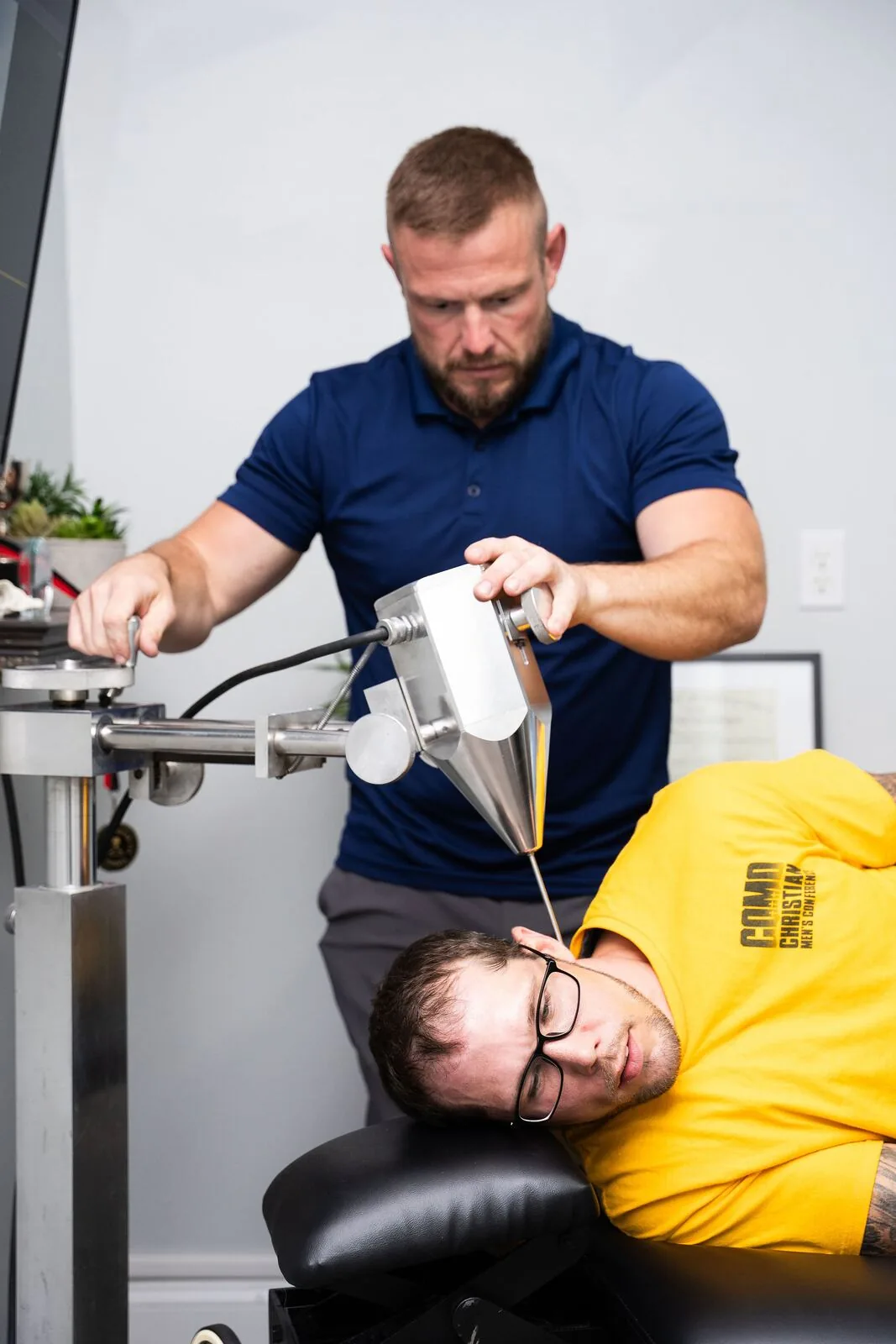
- Gentle, sound-wave-based correction is mathematically calculated to reduce distortion
- Ongoing monitoring tracks both structural and symptomatic change to ensure your correction holds
What Makes Our Approach Different
Medication and procedures for trigeminal neuralgia usually blunt pain signals without addressing why the nerve is irritated. We look upstream, at the brainstem junction where that irritation begins.
Precision Imaging
- Reveals atlas/axis effects on trigeminal nerve pathways
- Measurements customized to your exact anatomy
Precision Correction
- Mathematically calculated angle, vector, and depth
- No torque or forceful motion near sensitive facial nerve structures
Precision Results
- Tracked against attack frequency, duration, and intensity
- Verified structural change confirmed by post-correction imaging
Is This Right for You?
You may benefit from upper cervical care if you experience any of the following.
- Unexplained facial pain that comes in waves or electric bursts
- TMJ-like pain that doesn’t respond to dental or jaw treatment
- Facial numbness, tingling, or burning without a clear cause
- Head or neck injury before your pain began
- Multiple failed treatments with temporary relief at best
What to Expect At Gateway Upper Cervical Institute
- Step 1
Consult & Exam
We take time to understand your pain triggers, history, and neurological pattern.
- Step 2
Precision Imaging
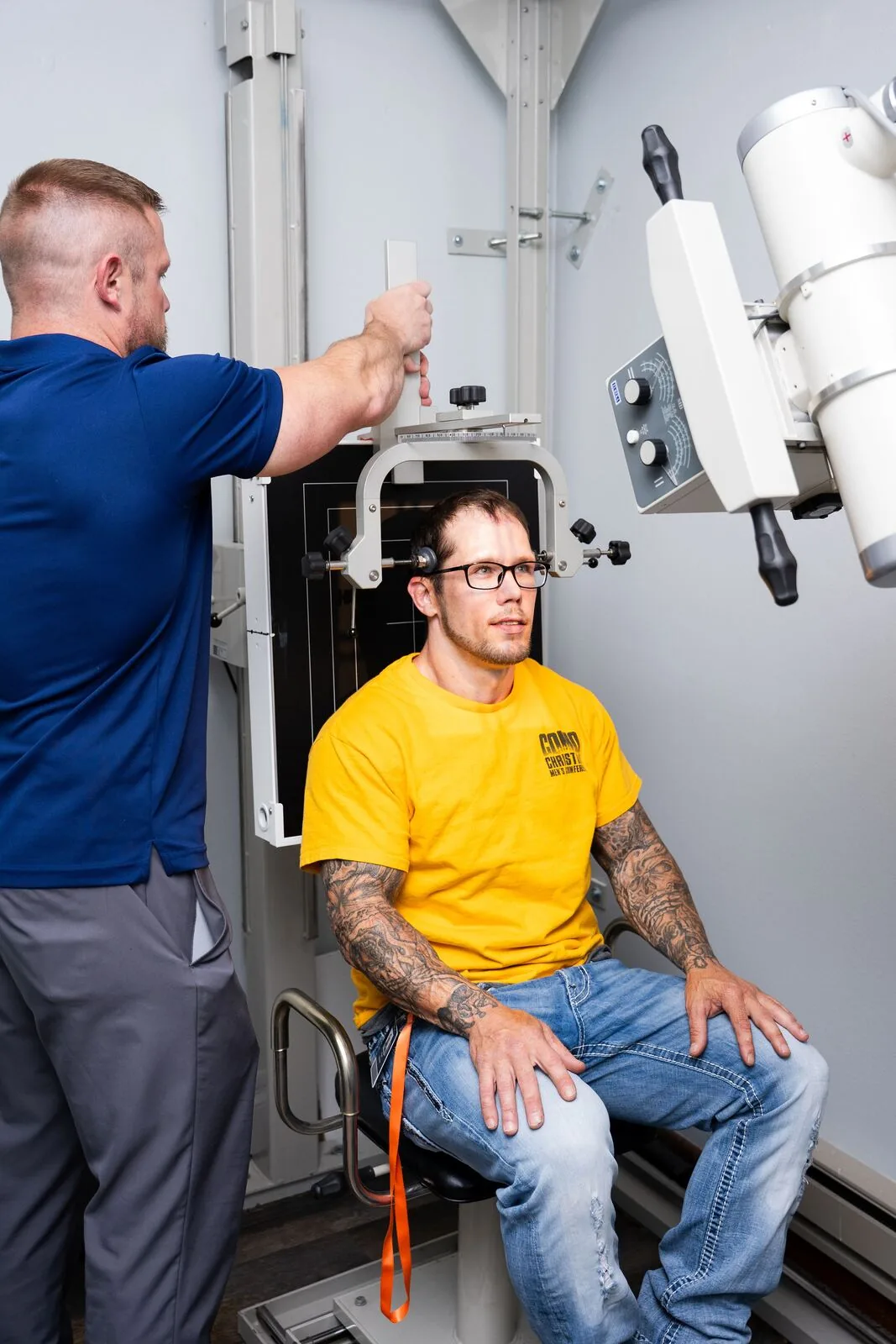
Specialized X-rays measure the exact angle and direction of your atlas (C1) and axis (C2) to fractions of a millimeter — the kind of precision a standard scan is not built to capture.
- Step 3
Gentle Correction
A gentle, sound-wave-based correction is calculated from your imaging and delivered with no twisting, popping, or cracking — the goal is not to move your neck a lot, it is to move it precisely so the correction holds.
- Step 4
Follow-Up & Stability
We monitor changes in pain frequency, intensity, and facial muscle symmetry to confirm measurable improvement.
We don’t just go by how you feel — we measure progress.
Attack frequency ↓
Fewer episodes triggered by chewing, speaking, or touch
Attack severity ↓
Shorter, less intense flare-ups when they do occur
Verified change ✓
Post-correction checks and imaging confirm improvement
Frequently Asked Questions
I’m on medication that only partly controls the pain. Can this replace it?
We don’t advise stopping medication on your own — that’s a conversation with your prescribing physician. What we offer is a structural approach that addresses irritation at the nerve’s origin, which for some patients reduces reliance on medication over time as attack frequency drops. We coordinate with your physician throughout.
Facial touch triggers my pain — will the correction near my head set it off?
The correction targets the upper neck, not the face, and uses a gentle sound-wave instrument rather than manual pressure near trigger zones. Most patients tolerate it well even when facial touch is a known trigger.
How is this different from the procedures I’ve already tried?
Procedures like nerve blocks or medication target the trigeminal nerve’s pain signal directly. This addresses a separate, often-overlooked contributor: structural irritation at the brainstem junction where the trigeminal nerve originates, which imaging can identify precisely.
Do you work with my neurologist managing my TN diagnosis?
Yes. Trigeminal neuralgia care often benefits from a team approach, and we coordinate with neurology and other providers so the structural correction fits into your broader treatment plan.
How soon would I know if this is affecting my attack frequency?
We track attack frequency, duration, and intensity from your first visit, and re-image after the initial correction to confirm alignment change. Many patients notice a shift in pattern within the first several weeks, though nerve irritation that’s been present for years can take longer to fully settle.
Published Research
This case series of five patients used Atlas Orthogonal correction, a closely related upper cervical technique, and reported reduced pain in four of five participants, including two with complete resolution — real but small, uncontrolled evidence, not a guarantee of the same result for every patient.
Ready for less facial pain?
If nothing else has helped, a precise upper cervical correction may be the missing link. Let’s find out together.
This page is for informational purposes only and is not a substitute for medical diagnosis or emergency care.