
Trigeminal Neuralgia
Trigeminal Neuralgia and the Upper Cervical Spine: What the Evidence Shows
By Dr. Max Orris, D.C. ·
Trigeminal neuralgia is a chronic facial pain condition most often caused by a blood vessel compressing the trigeminal nerve near the brainstem, and first-line treatment is an anticonvulsant medication that controls pain well for many patients at first but tends to lose effectiveness over time. A small number of published case reports have looked specifically at upper cervical chiropractic care in patients whose trigeminal neuralgia hadn't fully responded to standard treatment, based on a documented anatomical connection between the upper neck and the trigeminal nerve's own pain-processing pathway in the brainstem. That evidence is currently limited to individual case reports rather than controlled trials, but for patients who have exhausted or grown intolerant of standard options, a clinical evaluation of the upper cervical spine is a reasonable next step worth exploring.
What is trigeminal neuralgia, and how common is it?
Trigeminal neuralgia (TN) is a chronic pain condition affecting the trigeminal nerve, the main sensory nerve of the face. According to a clinical review on the National Institutes of Health's StatPearls platform, it produces sudden, unilateral, electric-shock-like pain lasting anywhere from a few seconds to about two minutes, most often in the cheek and jaw (the maxillary and mandibular branches of the nerve). Episodes are frequently triggered by ordinary activities — chewing, talking, brushing teeth, or a light touch to specific 'trigger zones' on the face — and rarely occur during sleep.
TN is uncommon but not rare. That same review reports an annual incidence of roughly 4 to 13 new cases per 100,000 people and a lifetime prevalence of about 0.16% to 0.3%, with women affected 1.5 to 1.7 times more often than men and onset typically occurring after age 50.
What causes it, and why does standard treatment sometimes stop working?
The most widely accepted explanation is vascular compression: a blood vessel — most often the superior cerebellar artery, implicated in an estimated 75% to 80% of compressive cases — presses on the trigeminal nerve root near the brainstem, according to StatPearls. Over time this is thought to wear away the nerve’s protective myelin coating, causing pain and touch signals to cross-talk in a way that produces the characteristic shock-like pain from otherwise ordinary stimulation.
First-line treatment is an anticonvulsant medication, usually carbamazepine or oxcarbazepine, which the American Association of Neurological Surgeons (AANS) notes controls pain for most people in the disease’s early stages. The same source is direct about a common complication, though: the effectiveness of carbamazepine decreases over time for many patients, sometimes requiring higher doses or additional medications that raise the risk of side effects such as dizziness, double vision, and drowsiness. When medication becomes ineffective or intolerable, the remaining options are more invasive — procedures such as microvascular decompression, which StatPearls reports has greater than 90% initial efficacy but which involves open surgery near the brainstem.
Diagnosis adds another layer of difficulty. AANS states plainly that TN "can be very difficult to diagnose, because there are no specific diagnostic tests" — the diagnosis rests on a patient’s description of the pain pattern and a clinical exam rather than a scan or blood test, which can draw out the path to an accurate diagnosis in the first place.
Why would the upper cervical spine matter in a facial-nerve condition?
The trigeminal nerve’s pain-processing pathway inside the brainstem is called the spinal trigeminal nucleus, and its lowest segment — the pars caudalis, responsible for pain and temperature sensation from the face — extends downward until it becomes directly continuous with the dorsal horn of the spinal cord at approximately the C3 level, according to a StatPearls neuroanatomy review. In plain terms, the same neurons that process facial pain signals are structurally connected to the sensory neurons of the upper cervical spine.
This anatomical overlap, sometimes called the trigeminocervical complex, is the same basic mechanism researchers point to when explaining how neck-related dysfunction can contribute to migraine and cervicogenic headache. It is a documented, real anatomical connection — not a hypothesis unique to chiropractic care — though anatomical plausibility on its own does not prove that treating the neck will change trigeminal nerve pain in a given patient. It simply explains why the question is worth asking.
What does the published research say about upper cervical care for trigeminal neuralgia?
Published research connecting upper cervical care directly to trigeminal neuralgia outcomes is limited, and what exists is case-report level. One case report published in the Journal of the Canadian Chiropractic Association describes a 68-year-old woman with 7.5 years of trigeminal neuralgia — previously unresponsive to acupuncture, physical therapy, and anticonvulsant medication — who received upper cervical chiropractic care targeting misalignment at C1 and C2. Over about 18 months of care, her symptoms were reported to have nearly fully resolved. As a single case report, this cannot establish that upper cervical care caused the improvement: the patient had also stopped several other treatments during that period, there was no control group, and a single case cannot be generalized to how any other patient would respond.
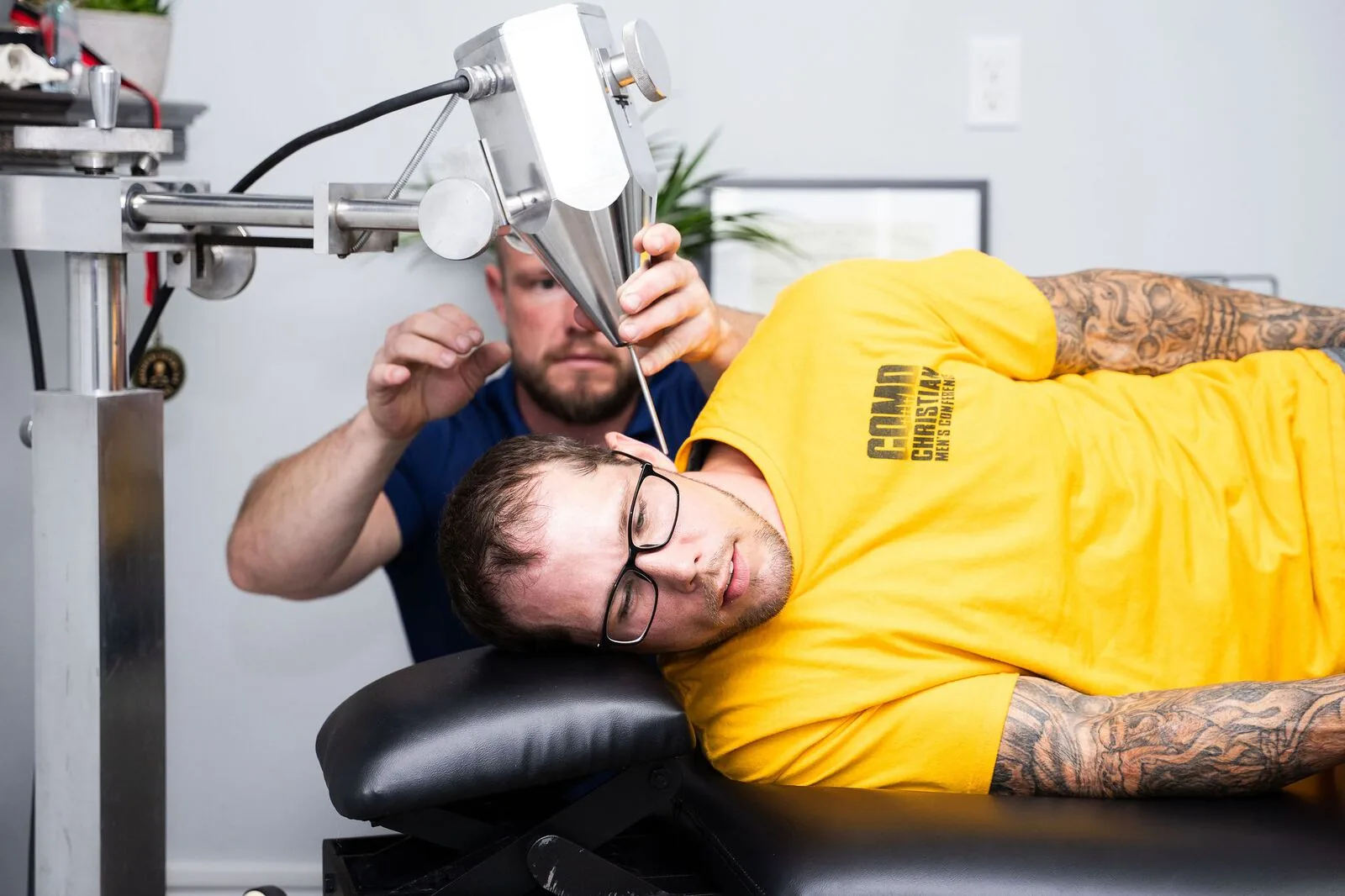
In our own experience providing Advanced Orthogonal upper cervical care — a precision, imaging-based correction of the same C1-C2 junction discussed above — we regularly see patients with trigeminal neuralgia report a real decrease in how often and how intensely their facial pain flares over the course of consistent care, including patients whose medication had already stopped working well for them. This is our own clinical observation from patients in this practice, not a claim drawn from the published research above, and outcomes vary from patient to patient — but it is consistent with the direction the case-report literature points.
What should you do if trigeminal neuralgia hasn't fully responded to standard care?
If carbamazepine or oxcarbazepine has stopped working as well as it once did, or side effects have become hard to tolerate, that is worth raising directly with the prescribing physician before considering any other option — a medication adjustment or specialist referral may resolve the issue on its own. For patients who have already had that conversation and are still searching for something more, a clinical evaluation that specifically examines the upper cervical spine is a reasonable next step to explore, given the anatomical connection and the case-level evidence described above.
This summary does not constitute medical advice and is not a substitute for an individualized clinical evaluation. An upper cervical evaluation typically starts with precise imaging of the C1-C2 junction to determine whether misalignment is present before any correction is recommended.
Key Takeaways
- Trigeminal neuralgia affects an estimated 4 to 13 people per 100,000 each year, and its first-line medication, carbamazepine, tends to lose effectiveness over time in many patients.
- Trigeminal neuralgia has no specific diagnostic test, so it is typically diagnosed from a patient’s pain pattern and a clinical exam rather than a scan or lab result.
- The trigeminal nerve’s brainstem pain-processing pathway (the spinal trigeminal nucleus) is anatomically continuous with the upper cervical spinal cord at approximately the C3 level, giving a documented anatomical basis for a possible neck connection.
- Published research connecting upper cervical chiropractic care to trigeminal neuralgia relief is currently limited to individual case reports, not controlled clinical trials.
- In this practice’s clinical experience, trigeminal neuralgia patients receiving consistent upper cervical care often see a reduction in how often and how intensely their facial pain flares, though outcomes vary by patient and this reflects clinical observation rather than published research.
Have a question about your own situation? We're glad to talk it through.
Request an AppointmentFrequently Asked Questions
Can a chiropractor help with trigeminal neuralgia?
Some patients explore upper cervical chiropractic care for trigeminal neuralgia, particularly when standard medication has stopped working well or become hard to tolerate. Published evidence on this specific approach is currently limited to individual case reports, so a clinical evaluation is the clearest way to find out whether it's a reasonable option in a specific case.
What triggers trigeminal neuralgia pain?
Trigeminal neuralgia episodes are commonly triggered by ordinary facial activities such as chewing, talking, or brushing teeth, and by light touch to specific trigger zones on the face. According to StatPearls, episodes typically last from a few seconds to about two minutes and rarely occur during sleep.
Why does trigeminal neuralgia medication stop working over time?
Anticonvulsant medications like carbamazepine can lose effectiveness in some patients as time goes on, according to the American Association of Neurological Surgeons, sometimes requiring higher doses or additional medications that raise the risk of side effects like dizziness and drowsiness.
Is trigeminal neuralgia related to a problem in the neck?
In most diagnosed cases, trigeminal neuralgia is attributed to a blood vessel compressing the nerve near the brainstem rather than a neck problem. However, the trigeminal nerve's pain-processing pathway is anatomically continuous with the upper cervical spinal cord, and a small number of published case reports have described improvement in trigeminal neuralgia symptoms following upper cervical care — an area worth exploring but not yet established through controlled research.
References
- Trigeminal Neuralgia. In: StatPearls [Internet]. Treasure Island (FL): StatPearls Publishing.
- Trigeminal Neuralgia. American Association of Neurological Surgeons (AANS).
- Neuroanatomy, Spinal Trigeminal Nucleus. In: StatPearls [Internet]. Treasure Island (FL): StatPearls Publishing.
- Rodine RJ, Aker P. Trigeminal neuralgia and chiropractic care: a case report. J Can Chiropr Assoc. 2010;54(3):177-186.
About the Author
Dr. Max Orris is an upper cervical chiropractor at Gateway Upper Cervical Institute in Pacific, Missouri, where he has practiced since 2016. He is certified in the Advanced Orthogonal technique and works with patients whose trigeminal neuralgia and other complex neurological presentations haven’t resolved with standard care.
Related: see the full condition page.
Have questions about your own situation?
Call (636) 271-2960 or request an appointment — we're glad to talk through what you're experiencing.